
News and Features
-
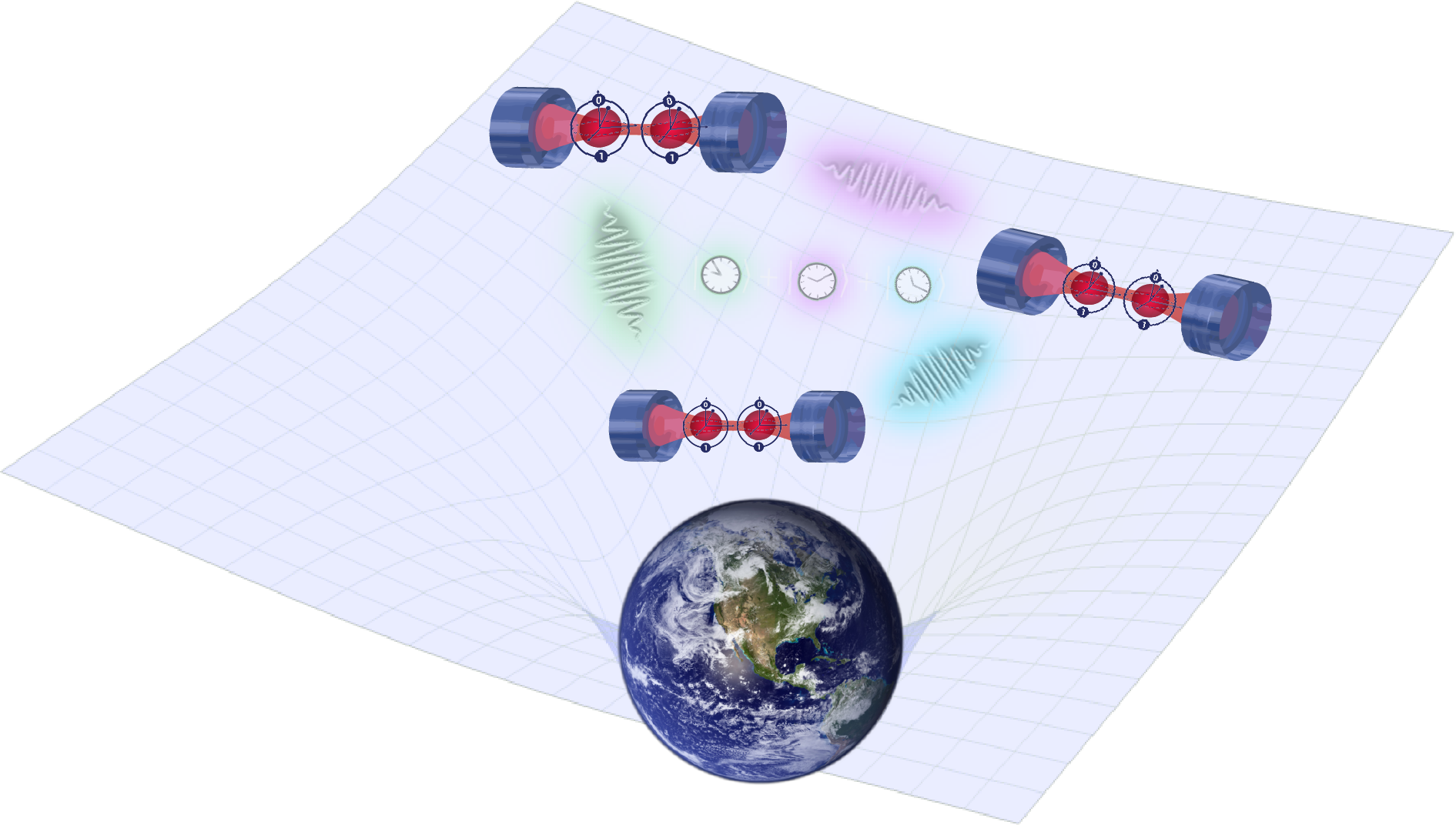
Quantum networks can probe general relativity on Earth
From the University of Illinois Urbana-Champaign: A study co-authored by Jacob Covey shows how a network of quantum computers employing optical clocks can probe gravitational effects on quantum systems. Read More
-
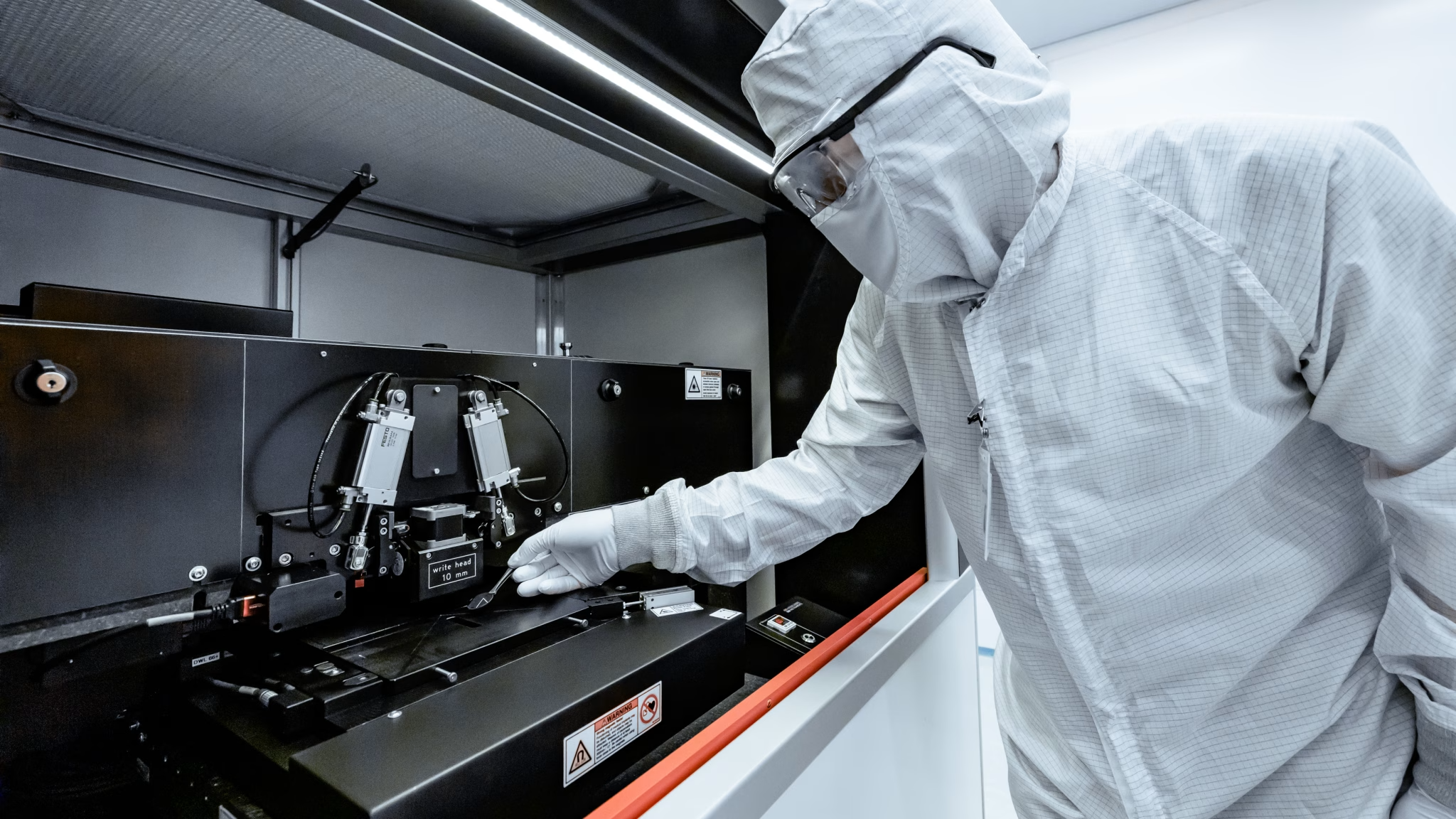
New trapped-atom qubit technology translates to industry-ready quantum computing product
A team of engineers and physicists at the University of Wisconsin-Madison led by Mikhail Kats and Mark Saffman have developed an ingenious method for trapping atoms of different species to make qubits. Capturing two types of neutral atoms next to each other, the method creates interleaved grids of cesium and rubidium atoms that can be used as qubits in quantum computing and quantum sensing. The setup is much simpler and more cost-effective than previous efforts to isolate and form interleaved grids of atoms and is already being used in early-stage quantum devices. Read More
-
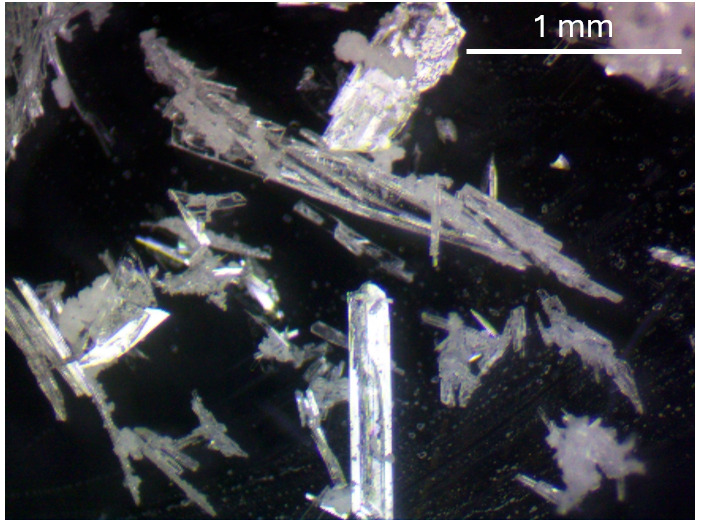
Stoichiometric crystal shows promise in quantum memory
In recent years, rare earth atoms in solid materials at cryogenic temperatures have shown to be promising for quantum memory. As part of this inquiry, researchers at the University of Illinois Urbana-Champaign have identified favorable properties in a stoichiometric europium material with a layered structure. They report the growth and characterization of NaEu(IO₃)₄, a rare earth material that may have future implications in quantum memory. Read More
-
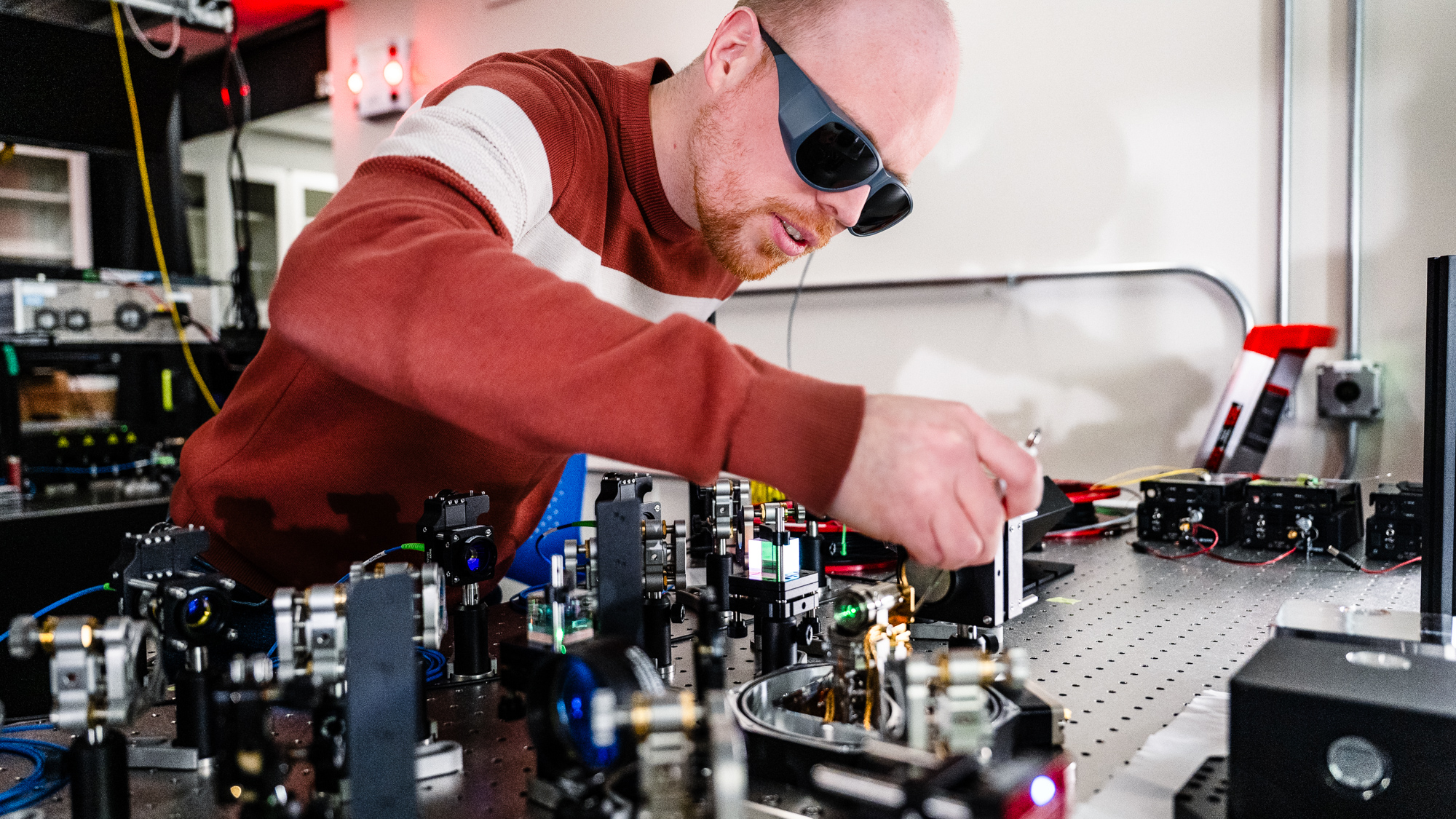
Creating color centers for quantum science
Argonne scientist Benjamin Pingault, a researcher at the Q-NEXT quantum center, creates color centers — qubits made by manipulating single atoms within a crystal — and emphasizes the importance of creativity and adaptability for fruitful collaboration. Read More
-

A new study provides insights into cleaning up noise in quantum entanglement
When it comes to purifying quantum entanglement, a new theoretical work highlights the importance of tailoring noise-minimizing solutions to specific quantum systems. Researchers at the University of Chicago, University of Illinois Urbana-Champaign and Microsoft have shown that it is fundamentally impossible to design a single one-size-fits-all protocol to counteract noise. Read More
-
New technique paves way for hybrid quantum networks
From the University of Chicago: Liang Jiang and his postdoctoral associate Zhaoyou Wang have developed a new scheme to send quantum information through transducers. Using their technique, they found they could send a full qubit’s information through a channel, paving the way for hybrid quantum networks. The results were published in Physical Review X. Read More
-
What is quantum coherence?
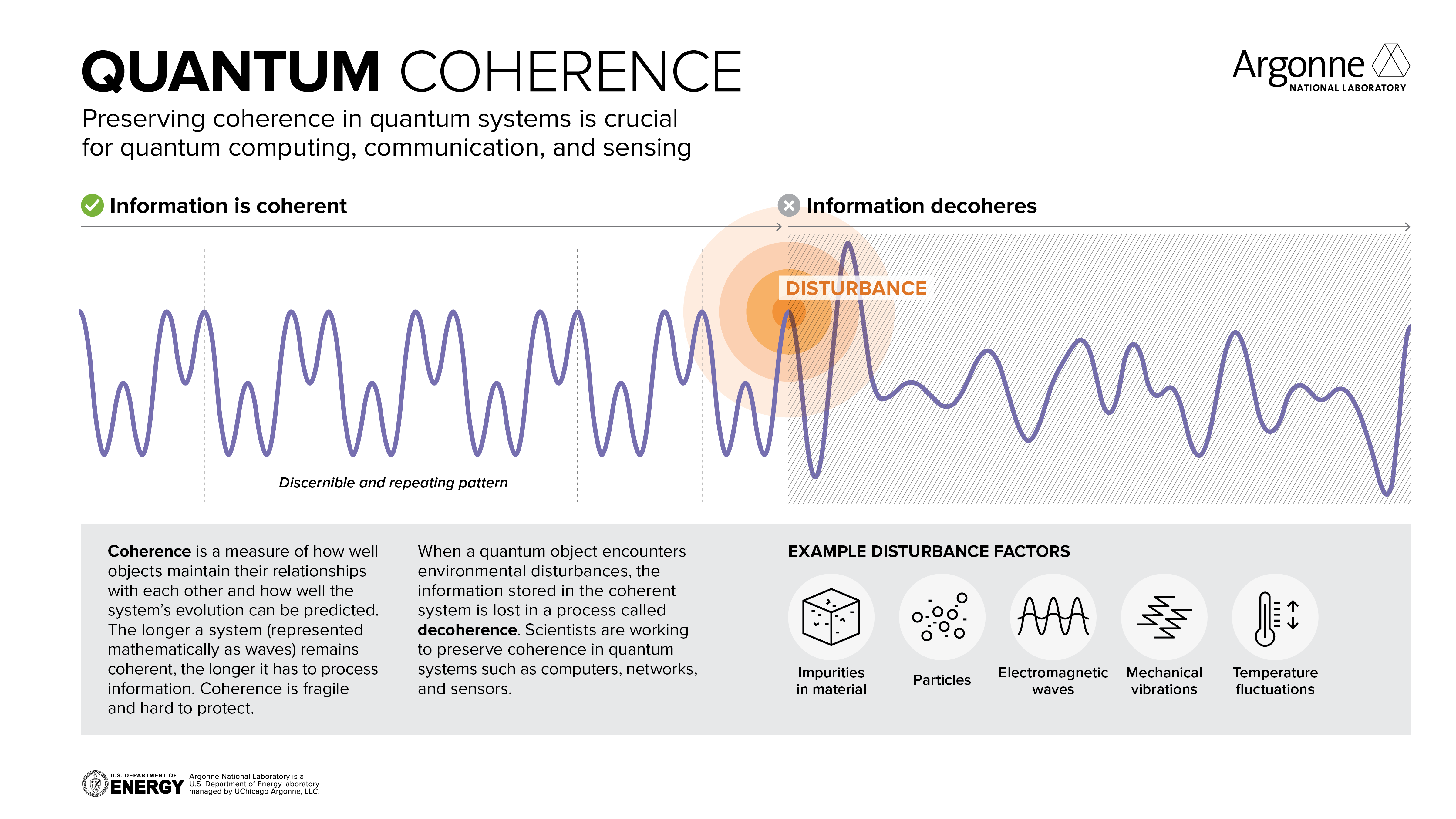
A quantum explainer: Preserving coherence keeps quantum systems clear and comprehensible. In working to extend coherence, scientists can better sync up quantum objects for high-resolution sensing and complex computation Read More
-
Orchestrating the nanoscale: exploring light and matter for quantum science
As part of the Q-NEXT quantum research center, Randall Goldsmith of the University of Wisconsin–Madison studies the interplay of light and matter, harnessing it for quantum information technologies. Read More
-

Scientists give big boost to signals from tin-based qubits
Stanford collaborators at the Q-NEXT quantum center amp up the signal from tin atoms embedded in diamond, opening possibilities for quantum networking. Read More
-
U.S. Department of Energy National Quantum Information Science Research Centers celebrate 4-year milestone, look toward future
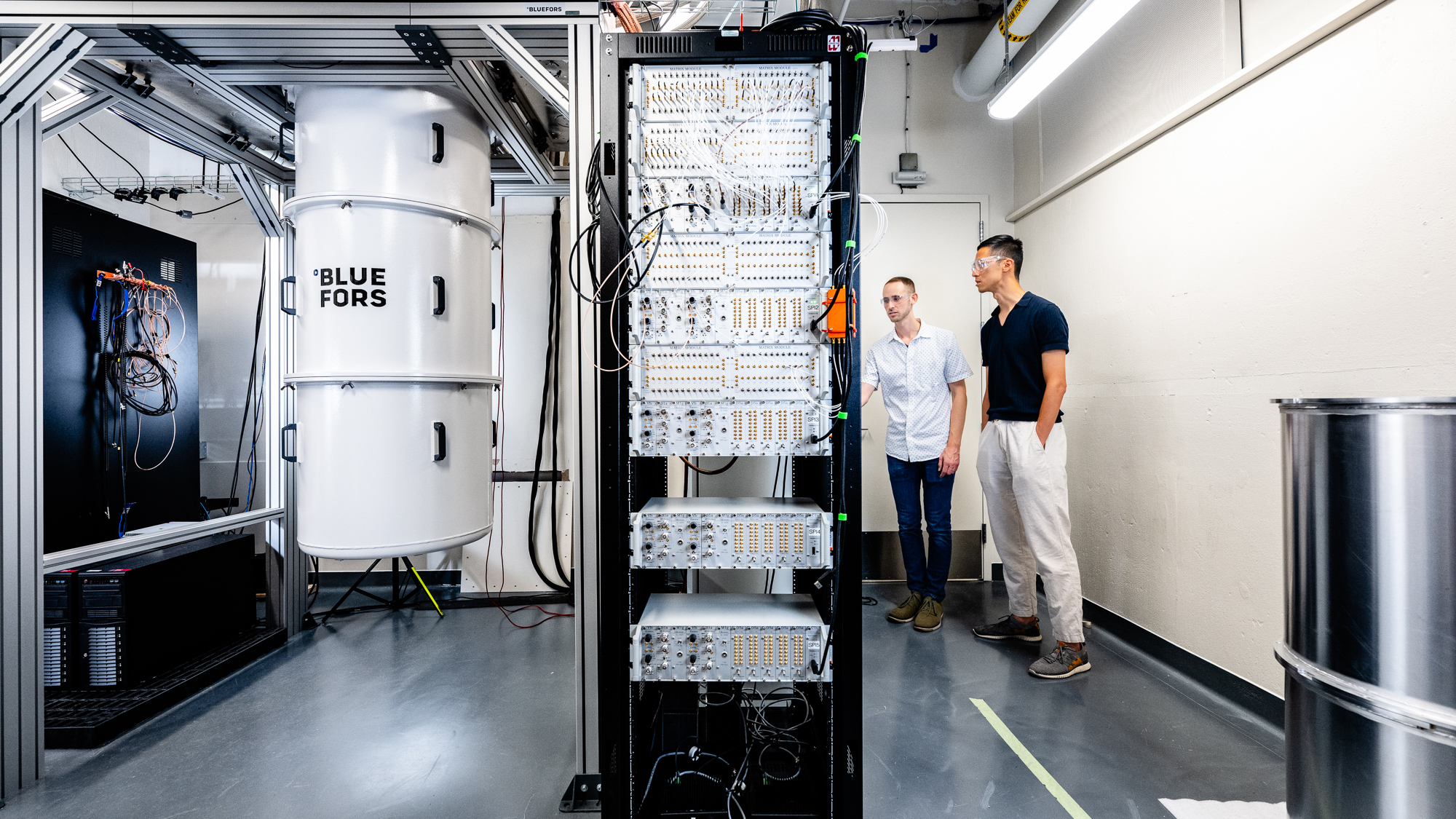
The five quantum centers have reached significant accomplishments, summarized in a new joint website, nqisrc.org. Read More
In the News
See all In the News-
Uncovering the hidden disorder in silicon quantum computers
From the U.S. Department of Energy: Q-NEXT researchers map the variation in materials to the atom level to scale up silicon qubits Read More
-
Neutral atom computers: the physics of Rydberg quantum gates | Mark Saffman
From 632nm: Mark Saffman, professor at the University of Wisconsin–Madison and chief scientist at Infleqtion, discusses the physics of optical tweezers and Rydberg gates, how neutral atoms perform quantum logic and create entanglement, and why this platform offers advantages in connectivity and scalability. Read More
-
Prof. Giulia Galli appointed CNRS Fellow-Ambassador
From the University of Chicago: With the appointment, Galli joins a prestigious cohort of leading figures from the world’s scientific community. Read More
-
Tuning into quantum sounds
From Caltech: Researchers at Caltech and Stanford University, including Stanford's Amir Safavi-Naeini, create tiny vibrating devices that can naturally display quantum behavior without needing an external quantum circuit. By harnessing microscopic defects already present in the material, the team achieved single-phonon nonlinear effects that could enable simpler quantum sensors capable of detecting and studying individual molecules with extraordinary sensitivity. Read More
-
Illinois touts growing quantum workforce as state shows industry leadership
From NPR Illinois: Q-NEXT Workforce Development Lead Emily Easton discusses the growing quantum education and workforce ecosystem in Illinois. Read More