
Argonne Quantum Foundry
-
Uncovering the hidden disorder in silicon quantum computers
From the U.S. Department of Energy: Q-NEXT researchers map the variation in materials to the atom level to scale up silicon qubits Read More
-
Spin qubits: sensing heartbeats to dark matter — with Argonne National Laboratory
From the Post Quantum World podcast: The word “foundry” might make you think of large machines pouring metal into molds, but Argonne National Lab has a Quantum Foundry that implants individual atoms, like silicon, into materials such as diamond. The resulting spin qubits are optically active and can use photons to communicate. We can expect spin qubits to help interconnect systems, which could help us achieve distributed quantum computing, but they also could be used for everything from room-temperature biological sensors to durable, space-based dark matter detectors. Join host Konstantinos Karagiannis for a cosmic chat with Benjamin Pingault from Argonne National Laboratory. Read More
-
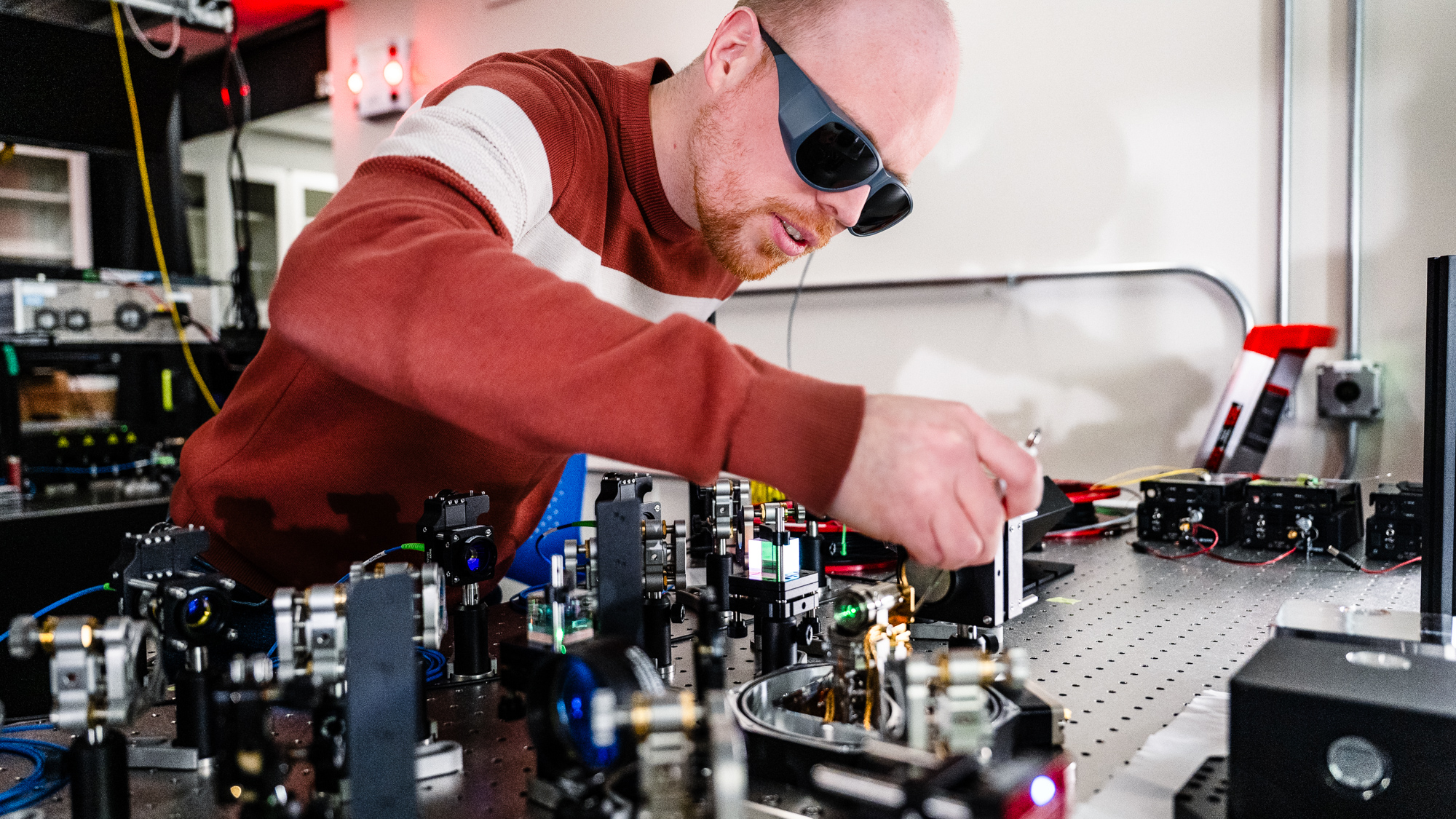
Creating color centers for quantum science
Argonne scientist Benjamin Pingault, a researcher at the Q-NEXT quantum center, creates color centers — qubits made by manipulating single atoms within a crystal — and emphasizes the importance of creativity and adaptability for fruitful collaboration. Read More
-
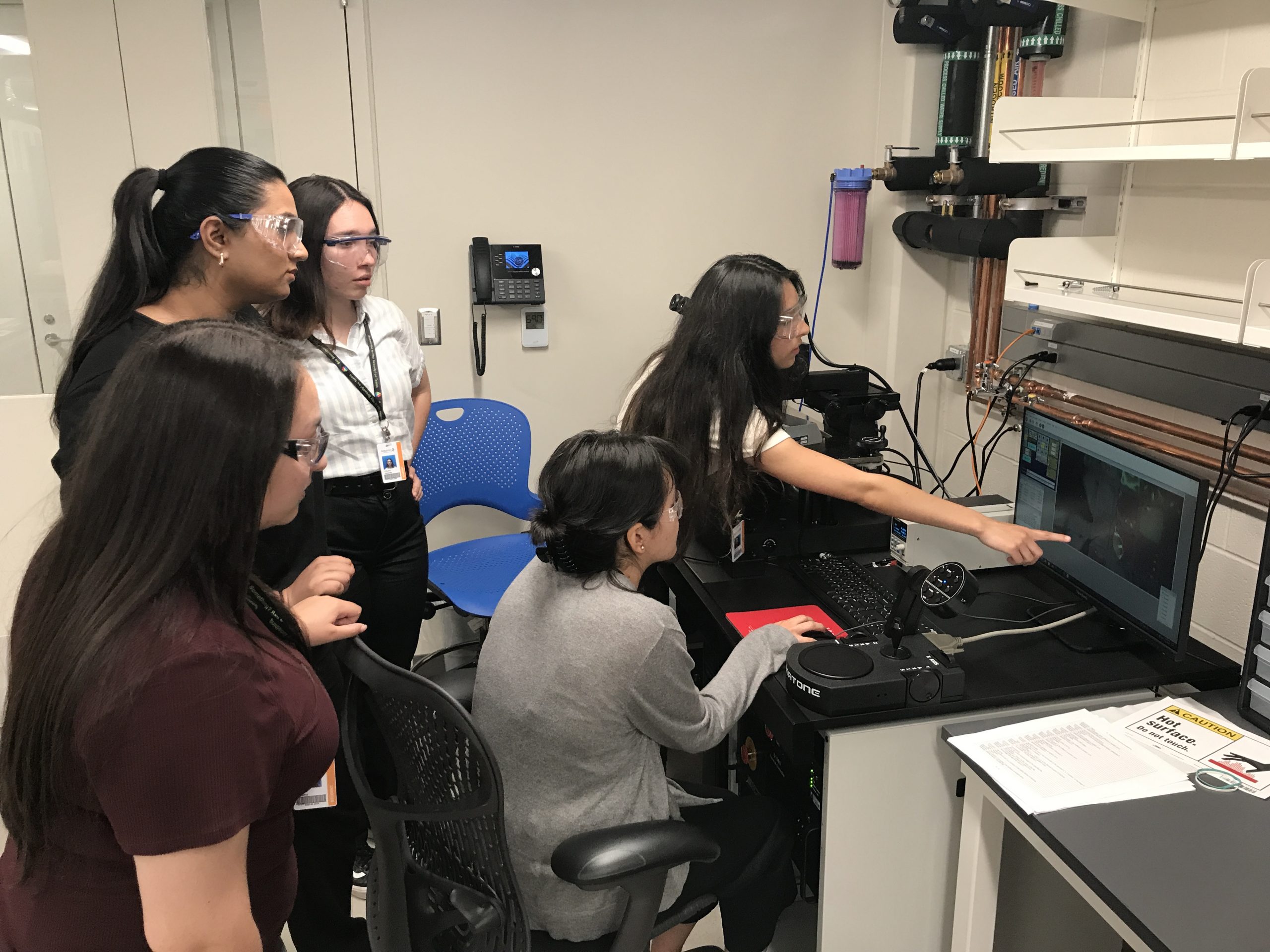
University of Illinois Chicago students write the book on automating diamond membrane creation for quantum devices
The Break Through Tech Chicago initiative enables six UIC students to develop a process that will accelerate the creation of quantum materials at Q-NEXT. Read More
-

Making the atomic universe visible
Pennsylvania State University's Nitin Samarth is helping grow the capabilities of the Argonne Quantum Foundry. He’s also building a library of atom-scale materials for quantum technologies — and he’s sharing it with everyone. Read More
-

Meet Edward Schmitt, facilities engineer
Former Marine Corps electronics technician Edward Schmitt keeps the Argonne Quantum Foundry running while advocating for veterans. Read More
-
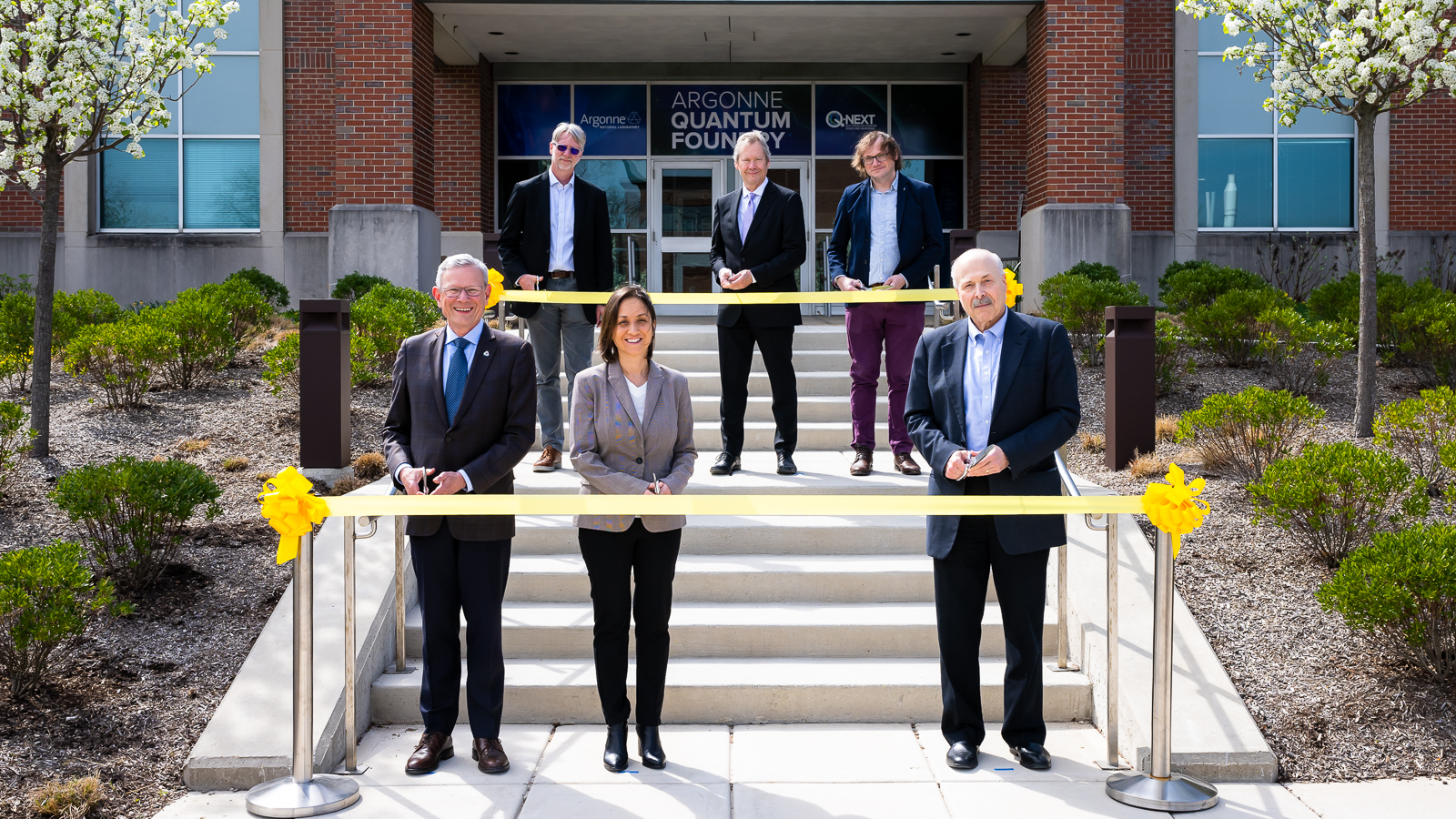
New foundry to accelerate quantum information research at Argonne National Laboratory
The Argonne Quantum Foundry is meeting a critical need for quantum science by providing a robust supply chain of materials for quantum devices and systems. Read More
-

Argonne Quantum Foundry renovations begin
The Argonne Quantum Foundry is located in Argonne’s Building 222. Photo: Argonne National Laboratory In August, Argonne National Laboratory began renovations on the Argonne Quantum Foundry, which will support Q-NEXT research in quantum communication, computation, sensing and materials. Located in Argonne’s Building… Read More
-
From the Quantum Foundry Thrust lead
Since Q-NEXT’s inception, the quantum foundry thrust has been ramping up design and build-out at Argonne and SLAC to meet scientific requirements for Q-NEXT and conform with on-site safety protocols. The foundries will serve as a national resource producing a robust supply chain of standardized materials and devices that will support both known and yet-to-be-discovered quantum-enabled applications. Read More
In the News
See all In the News-
Uncovering the hidden disorder in silicon quantum computers
From the U.S. Department of Energy: Q-NEXT researchers map the variation in materials to the atom level to scale up silicon qubits Read More
-
Neutral atom computers: the physics of Rydberg quantum gates | Mark Saffman
From 632nm: Mark Saffman, professor at the University of Wisconsin–Madison and chief scientist at Infleqtion, discusses the physics of optical tweezers and Rydberg gates, how neutral atoms perform quantum logic and create entanglement, and why this platform offers advantages in connectivity and scalability. Read More
-
Prof. Giulia Galli appointed CNRS Fellow-Ambassador
From the University of Chicago: With the appointment, Galli joins a prestigious cohort of leading figures from the world’s scientific community. Read More
-
Tuning into quantum sounds
From Caltech: Researchers at Caltech and Stanford University, including Stanford's Amir Safavi-Naeini, create tiny vibrating devices that can naturally display quantum behavior without needing an external quantum circuit. By harnessing microscopic defects already present in the material, the team achieved single-phonon nonlinear effects that could enable simpler quantum sensors capable of detecting and studying individual molecules with extraordinary sensitivity. Read More
-
Illinois touts growing quantum workforce as state shows industry leadership
From NPR Illinois: Q-NEXT Workforce Development Lead Emily Easton discusses the growing quantum education and workforce ecosystem in Illinois. Read More