
News and Features
-

IBM’s Jason Orcutt moves the world toward an interconnected quantum future
Jason Orcutt of IBM provides an industry perspective on quantum simulation research at Q-NEXT and works to connect quantum information systems around the globe. Read More
-
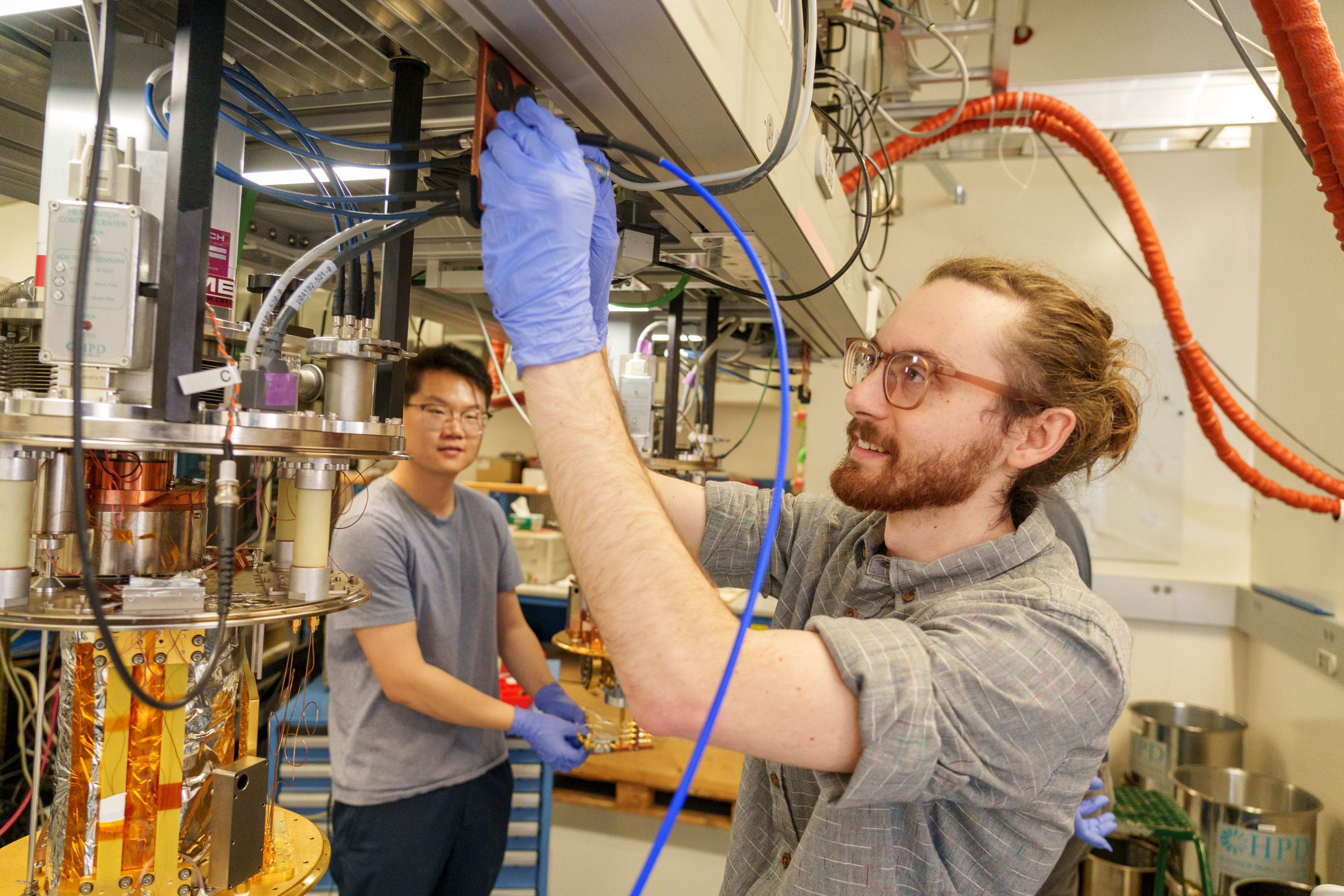
Argonne and UChicago PME researchers “split” phonons – or sound – in step toward new type of quantum computer
In two experiments, a research team led by Andrew Cleland uses an acoustic beam splitter to demonstrate the quantum properties of phonons. The experiments are first of their kind and could lead to new advances in computing Read More
-
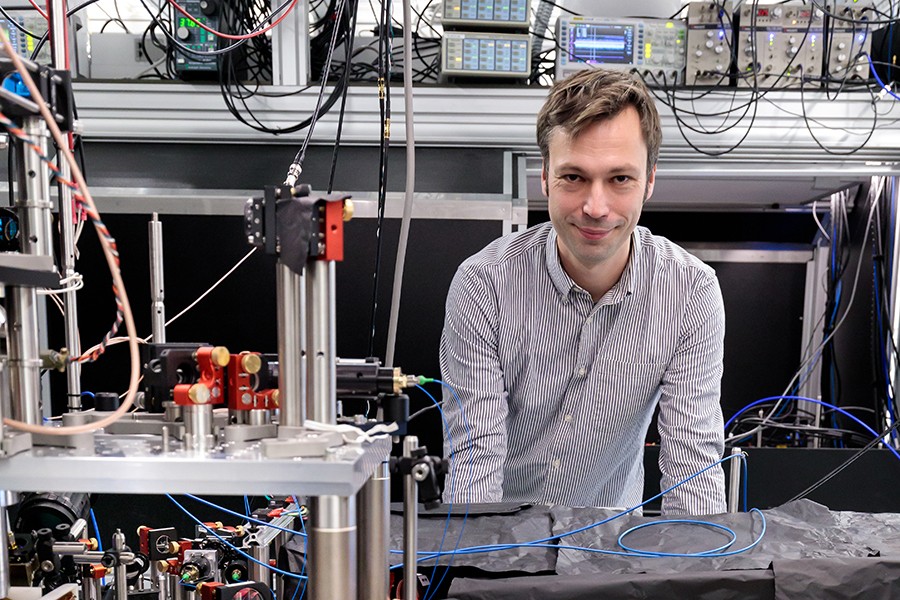
‘Noise-cancelling’ qubits developed at UChicago to minimize errors in quantum computers
Researchers at the University of Chicago have developed a new method to constantly monitor the noise around a quantum system and adjust the qubits, in real time, to minimize error. The approach, described in "Science," relies on spectator qubits: a set of qubits embedded in the computer with the sole purpose of measuring outside noise rather than storing data. The information gathered by such spectator qubits can then be used to cancel out noise in vital data-processing qubits. Read More
-
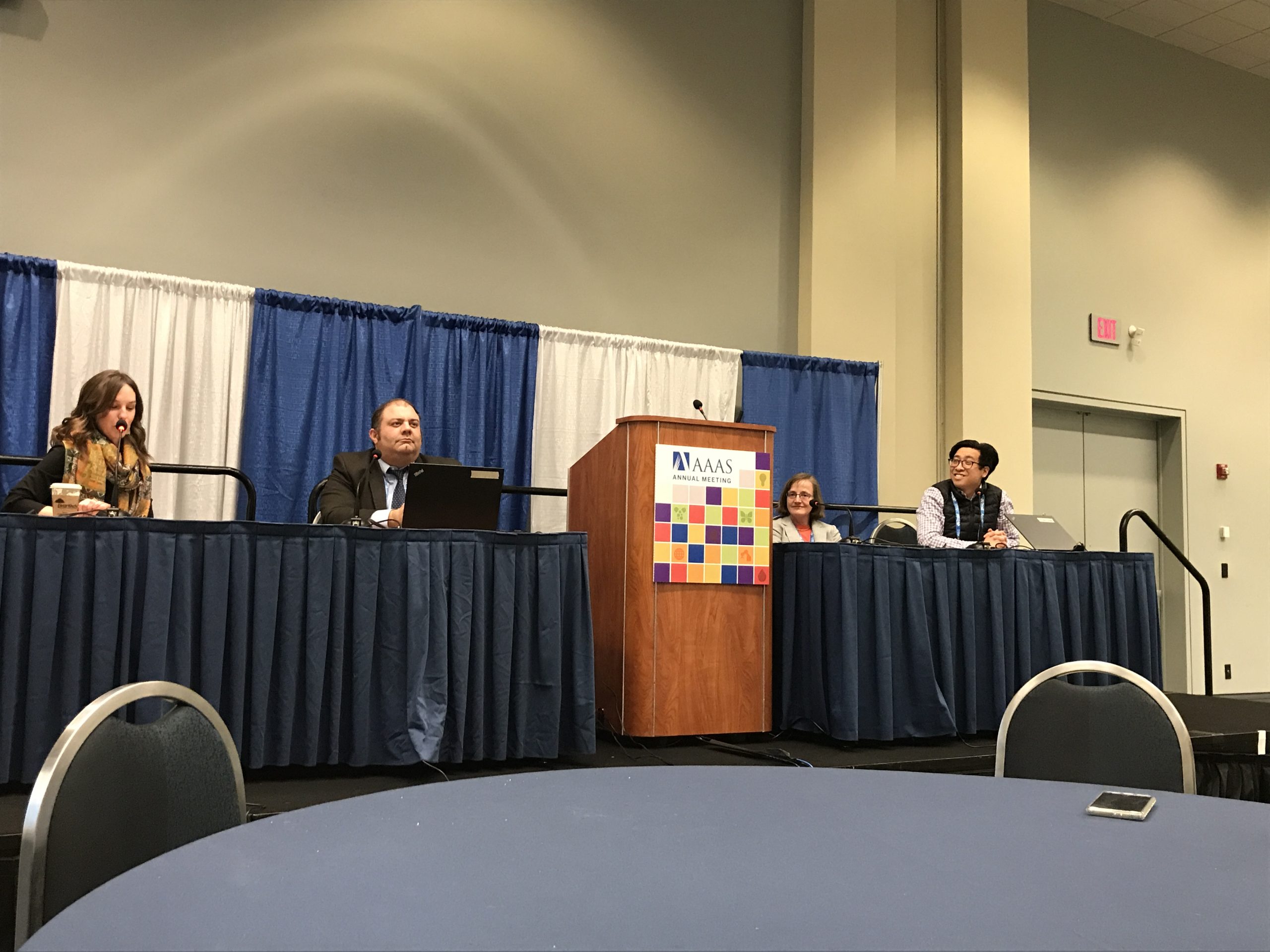
Democratizing quantum information science
At the 2023 AAAS Meeting in Washington, DC, experts discuss how the scientific community can make quantum information science more accessible and reach a wider base of innovators. Read More
-
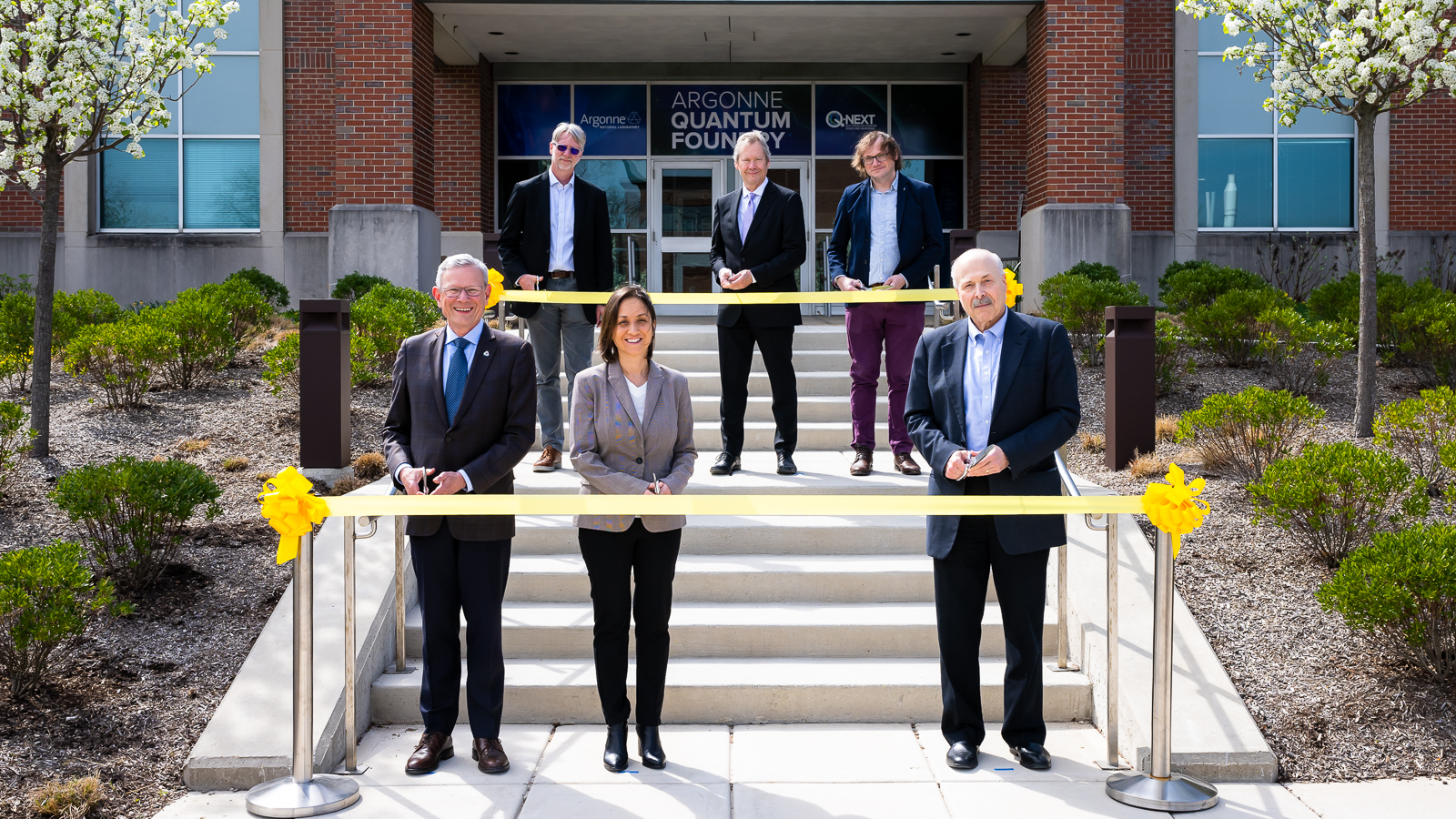
New foundry to accelerate quantum information research at Argonne National Laboratory
The Argonne Quantum Foundry is meeting a critical need for quantum science by providing a robust supply chain of materials for quantum devices and systems. Read More
-
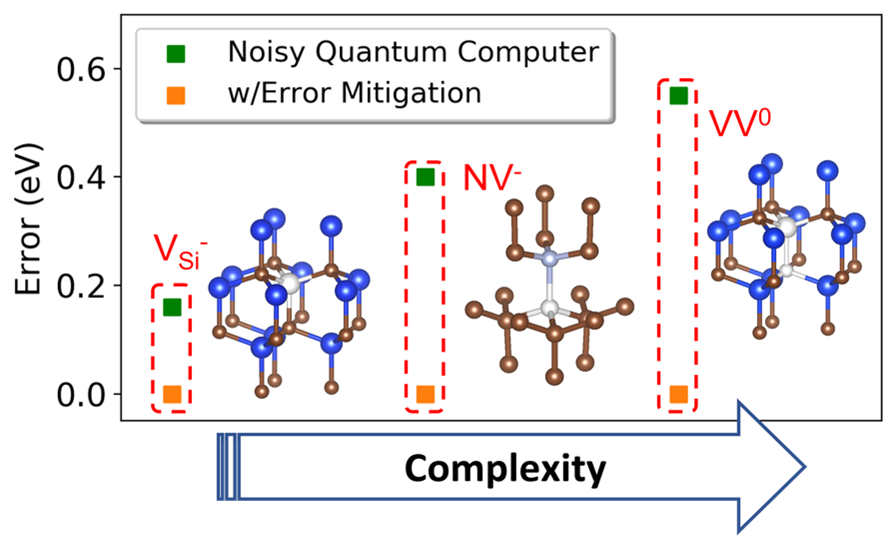
A new quantum approach to solve electronic structures of complex materials
From the University of Chicago: Researchers at the University of Chicago and Argonne National Laboratory have explored the possibility of solving the electronic structures of complex molecules using a quantum computer. The research, which uses a combination of new computational approaches, was published online in the Journal of Chemical Theory and Computation. Read More
-
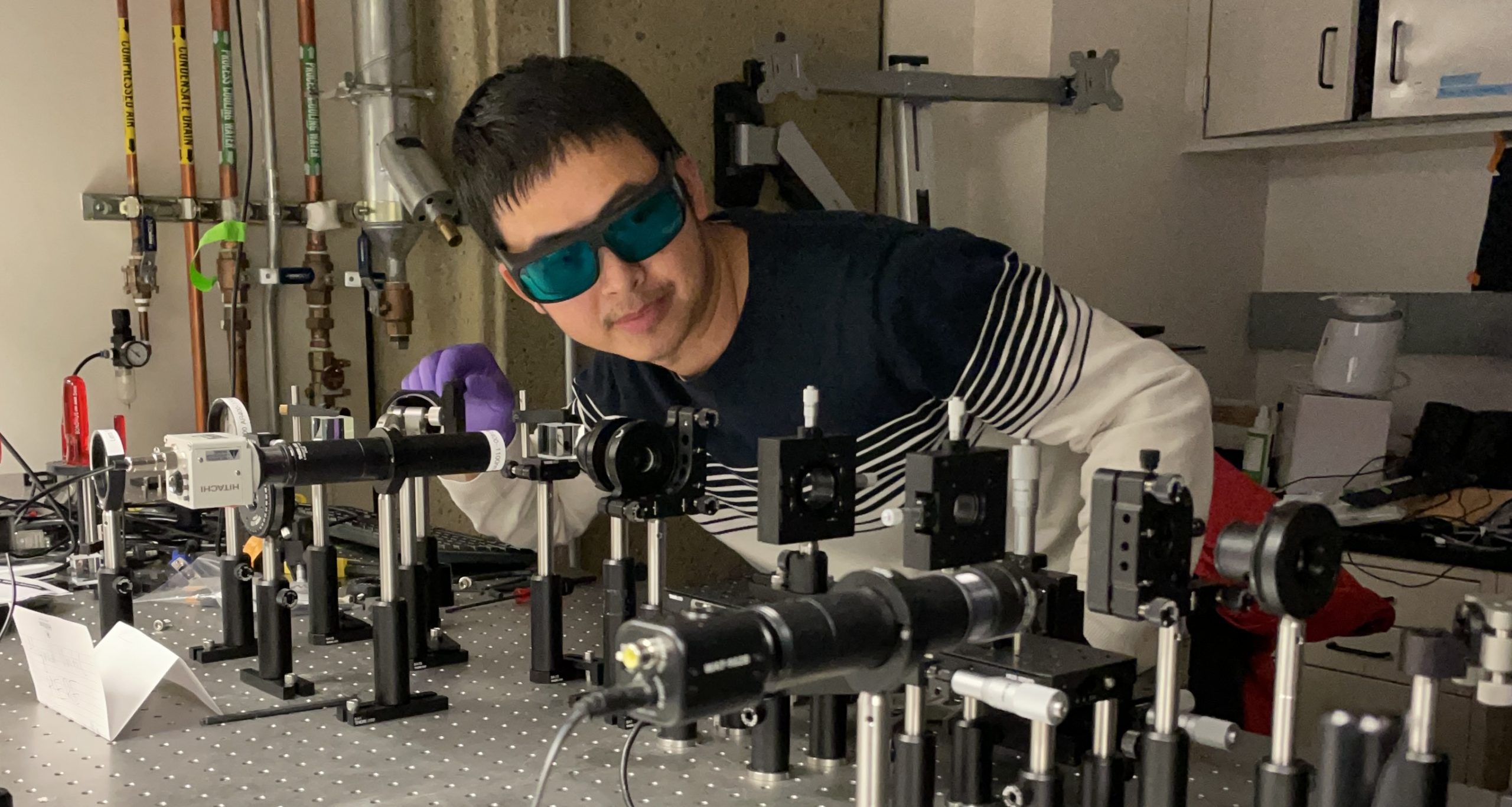
Feng Pan sculpts ultrathin materials for quantum information research
The Stanford University postdoctoral researcher develops high-tech materials to deliver photon packages of quantum information. Read More
-

New quantum sensing technique reveals magnetic connections
A research team supported by the Q-NEXT quantum research center demonstrates a new way to use quantum sensors to tease out relationships between microscopic magnetic fields. Read More
-

Q-NEXT releases roadmap for the development of quantum information technologies
The roadmap serves as a guide for research and development in quantum interconnects, devices that link and distribute quantum information between systems and across distances to enable quantum computing, communications and sensing. Read More
In the News
See all In the News-
Uncovering the hidden disorder in silicon quantum computers
From the U.S. Department of Energy: Q-NEXT researchers map the variation in materials to the atom level to scale up silicon qubits Read More
-
Neutral atom computers: the physics of Rydberg quantum gates | Mark Saffman
From 632nm: Mark Saffman, professor at the University of Wisconsin–Madison and chief scientist at Infleqtion, discusses the physics of optical tweezers and Rydberg gates, how neutral atoms perform quantum logic and create entanglement, and why this platform offers advantages in connectivity and scalability. Read More
-
Prof. Giulia Galli appointed CNRS Fellow-Ambassador
From the University of Chicago: With the appointment, Galli joins a prestigious cohort of leading figures from the world’s scientific community. Read More
-
Tuning into quantum sounds
From Caltech: Researchers at Caltech and Stanford University, including Stanford's Amir Safavi-Naeini, create tiny vibrating devices that can naturally display quantum behavior without needing an external quantum circuit. By harnessing microscopic defects already present in the material, the team achieved single-phonon nonlinear effects that could enable simpler quantum sensors capable of detecting and studying individual molecules with extraordinary sensitivity. Read More
-
Illinois touts growing quantum workforce as state shows industry leadership
From NPR Illinois: Q-NEXT Workforce Development Lead Emily Easton discusses the growing quantum education and workforce ecosystem in Illinois. Read More