
phonons
-
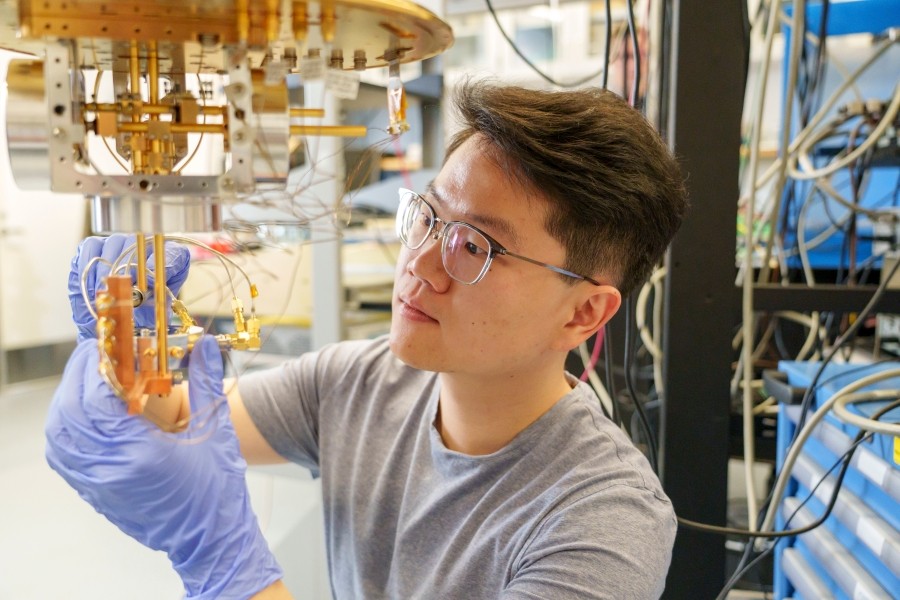
Tomorrow’s quantum computers could use sound, not light
New research at the University of Chicago has achieved deterministic phase control of the sound “particles” known as phonons, presenting a major advantage over photon-based quantum systems. Read More
-
Using sound to remember quantum information
From Caltech: Mohammad Mirhosseini of Caltech and team develop a hybrid quantum memory that stores quantum states from superconducting qubits as sound, extending storage times up to 30 times longer than existing methods. Read More
-
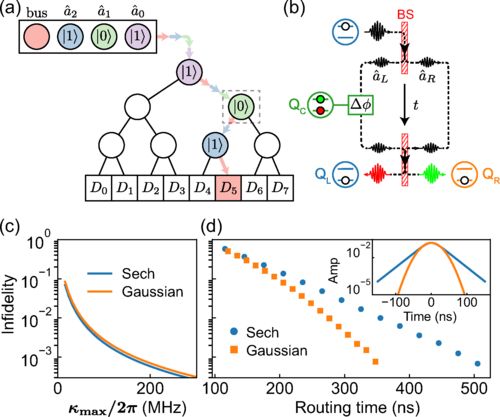
A new design for quantum random access memory
Scientists present a new design for quantum random access memory, which allows a quantum computer to look up multiple pieces of data memory locations at once in a superposition. Read More
-
Innovative phonon-based quantum computing research at UChicago Engineering gets a $3 million boost by the U.S. Department of Defense
From the University of Chicago: Q-NEXT collaborator Andrew Cleland has been named a 2024 Vannevar Bush faculty fellow, the U.S. Department of Defense’s flagship single-investigator award for basic research. Cleland will use the fellowship money to advance phonon-based quantum computing. Read More
-
The consequences of removing the world largest dam, and building a quantum computer using sound waves
From the Science Podcast: University of Chicago's Andrew Cleland discusses his work on using the phonon as the basis of quantum computing. Read More
-
How splitting sound might lead to a new kind of quantum computer
From The Conversation: Andrew Cleland of the University of Chicago writes about using beam splitters to explore the quantum properties of phonons. His findings could lead researchers to use phonons to build a new type of quantum computer. Read More
-
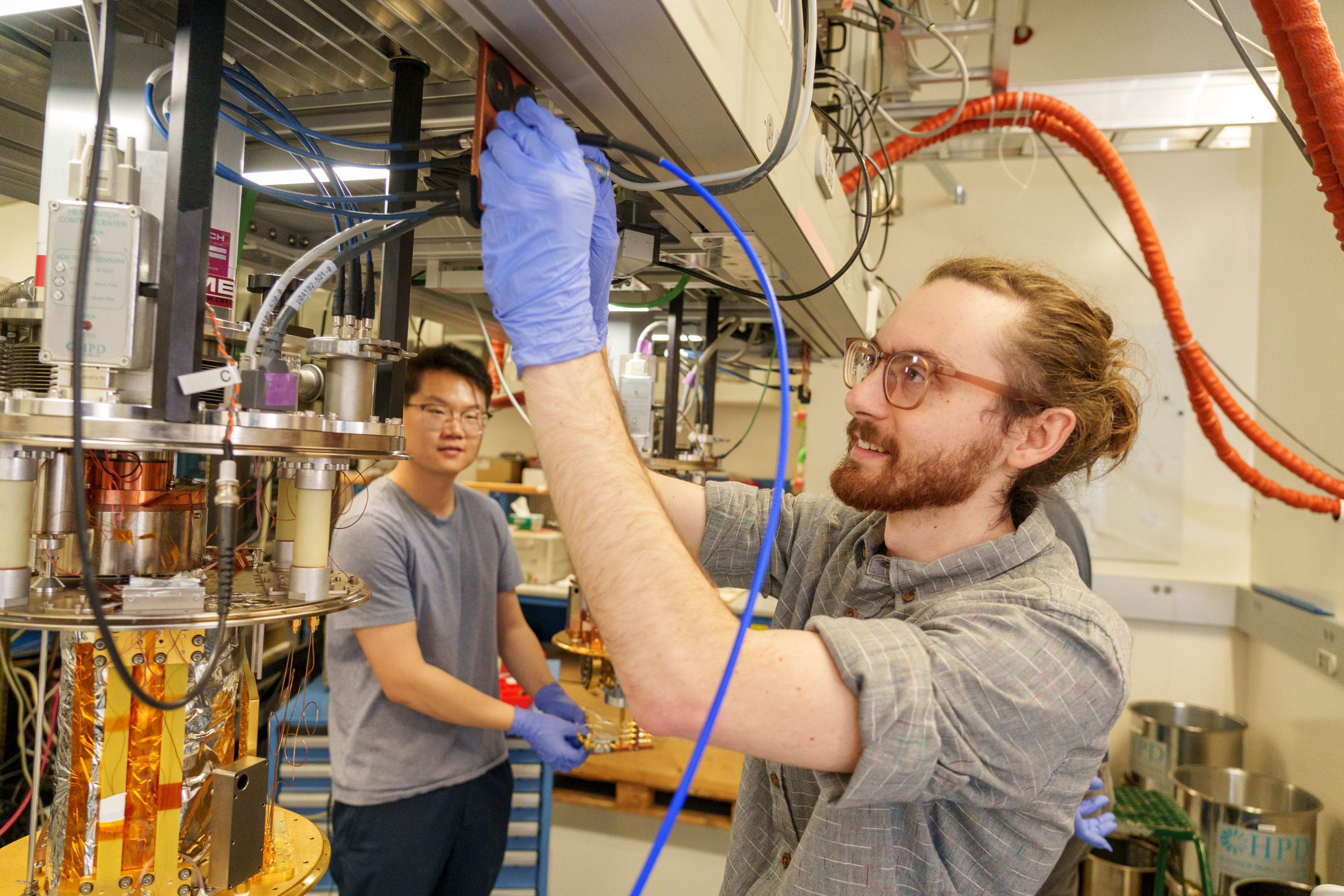
Argonne and UChicago PME researchers “split” phonons – or sound – in step toward new type of quantum computer
In two experiments, a research team led by Andrew Cleland uses an acoustic beam splitter to demonstrate the quantum properties of phonons. The experiments are first of their kind and could lead to new advances in computing Read More
-
Sound-based quantum computers could be built using chip-sized device
From New Scientist: A crucial building block for quantum computers based on sound has been shown to work for the first time. Andrew Cleland at the University of Chicago have built a chip-sized device that can manipulate particles of sound in a way that mimics how particles of light are used in light-based quantum computers, opening the door for building sound-based quantum computers. Read More
In the News
See all In the News-
Uncovering the hidden disorder in silicon quantum computers
From the U.S. Department of Energy: Q-NEXT researchers map the variation in materials to the atom level to scale up silicon qubits Read More
-
Neutral atom computers: the physics of Rydberg quantum gates | Mark Saffman
From 632nm: Mark Saffman, professor at the University of Wisconsin–Madison and chief scientist at Infleqtion, discusses the physics of optical tweezers and Rydberg gates, how neutral atoms perform quantum logic and create entanglement, and why this platform offers advantages in connectivity and scalability. Read More
-
Prof. Giulia Galli appointed CNRS Fellow-Ambassador
From the University of Chicago: With the appointment, Galli joins a prestigious cohort of leading figures from the world’s scientific community. Read More
-
Tuning into quantum sounds
From Caltech: Researchers at Caltech and Stanford University, including Stanford's Amir Safavi-Naeini, create tiny vibrating devices that can naturally display quantum behavior without needing an external quantum circuit. By harnessing microscopic defects already present in the material, the team achieved single-phonon nonlinear effects that could enable simpler quantum sensors capable of detecting and studying individual molecules with extraordinary sensitivity. Read More
-
Illinois touts growing quantum workforce as state shows industry leadership
From NPR Illinois: Q-NEXT Workforce Development Lead Emily Easton discusses the growing quantum education and workforce ecosystem in Illinois. Read More