University of Chicago
-
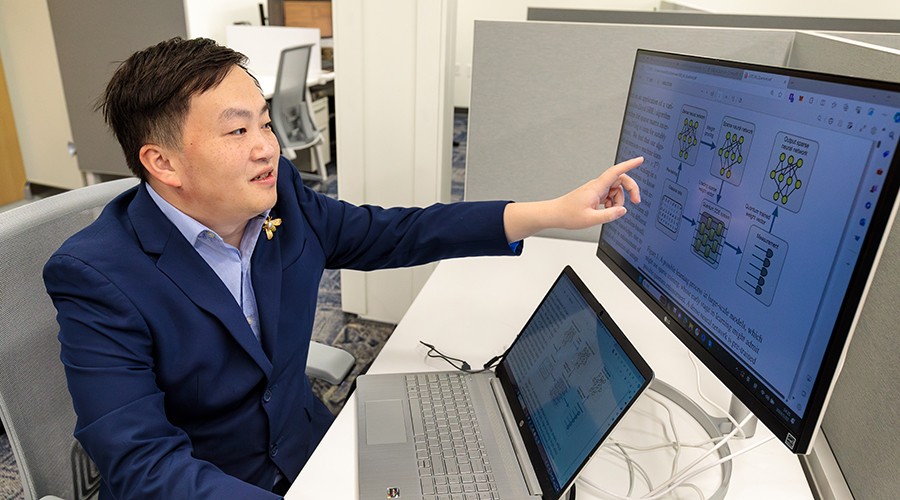
New research unites quantum engineering and artificial intelligence
A team of researchers at Argonne National Laboratory, University of Chicago and other institutions shows how incorporating quantum computing into the classical machine-learning process can potentially help make machine learning more sustainable and efficient. Read More
-

Chloe Washabaugh creates designer molecules for the quantum future
Q-NEXT collaborator and UChicago grad student Chloe Washabaugh creates high-performance qubits from designer molecules. Not only is she expanding the applications of quantum devices, but she’s also working to attract a diverse audience to quantum. Read More
-
University, government, and industry researchers join forces to explore how quantum computing could aid financial institutions
From the Chicago Quantum Exchange: In a paper published in Nature Reviews Physics, a team of experts from Argonne National Laboratory, JPMorgan Chase, Fujitsu Research of America, Menten AI, the University of Chicago and the University of Delaware create a one-stop resource on the use of quantum computers to accelerate solutions for the finance sector. The paper discusses challenges in three categories at the intersection of finance and computing: optimization, machine learning and stochastic modeling. Read More
-
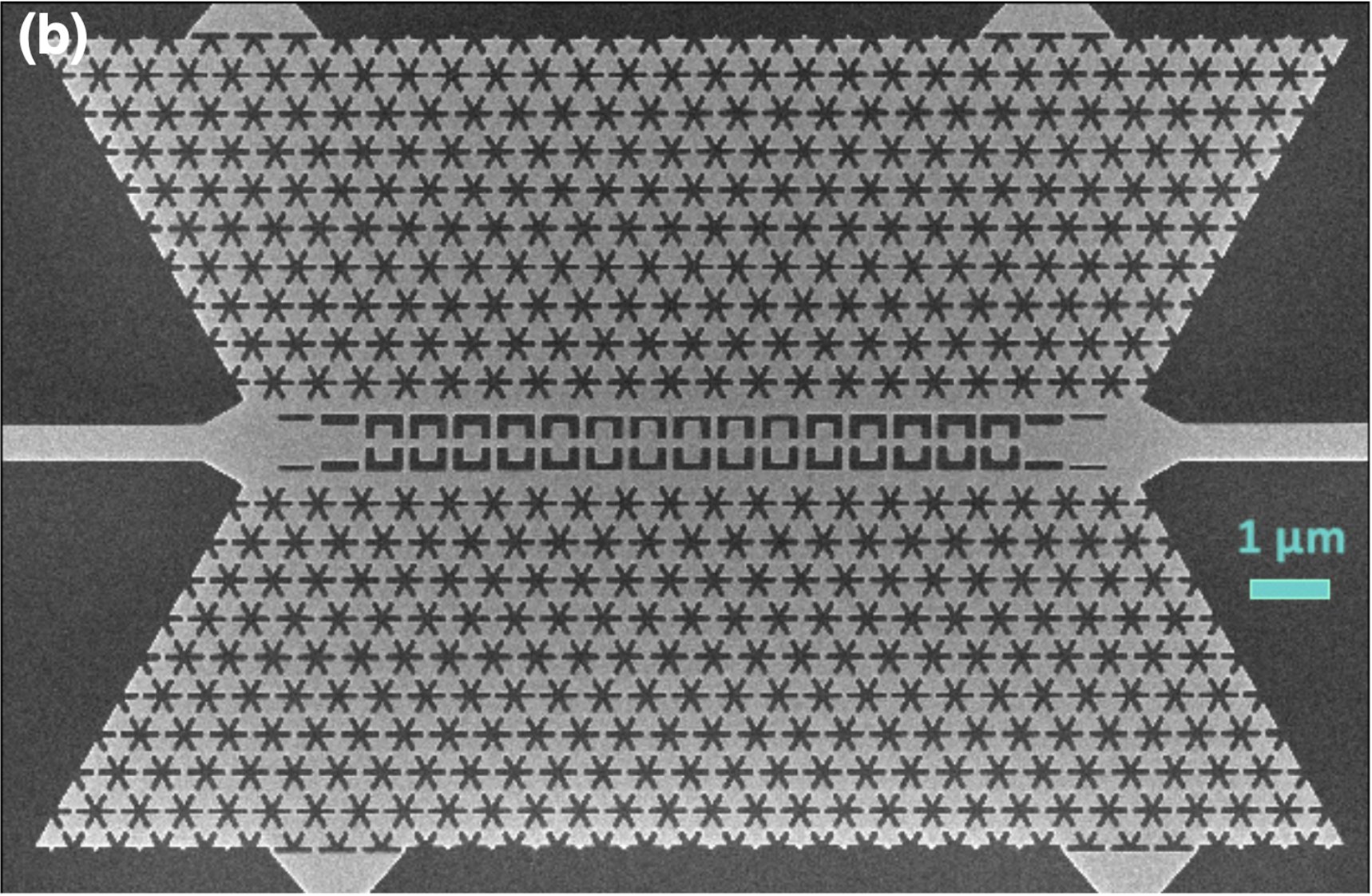
Gallium arsenide resonator for coupling quantum information
Researchers have developed a resonator that could allow #quantum information to smoothly transition betwween the microwave and infrared at frequencies perfect for superconducting qubits. Read More
-

In novel quantum computer design, qubits use magnets to selectively communicate
Researchers have begun to use magnets to entangle qubits, the building blocks of quantum computers; the simple technique could unlock complex capabilities. Read More
-
IBM and top universities to advance quantum education for 40,000 students in Japan, South Korea and the United States
From PR Newswire: IBM has announced the company intends to engage with Keio University, the University of Tokyo, Yonsei University, Seoul National University and the University of Chicago to work together to support quantum education activities in Japan, Korea and the United States. IBM intends to deliver educational offerings, in combination with contributions from each of the participating universities, to advance the training of up to 40,000 students over the next 10 years to prepare them for the quantum workforce and promote the growth of a global quantum ecosystem. Read More
-
Hannes Bernien awarded the 2023 Klung Wilhelmy Science Prize for pioneering quantum work
From the University of Chicago: Q-NEXT collaborator Hannes Bernien of the University of Chicago has won the Klung Wilhelmy Science Prize in Physics for his pioneering early studies on defect centers in diamonds and work he is currently pursuing to develop quantum technology platforms based on Rydberg atoms. Read More
-
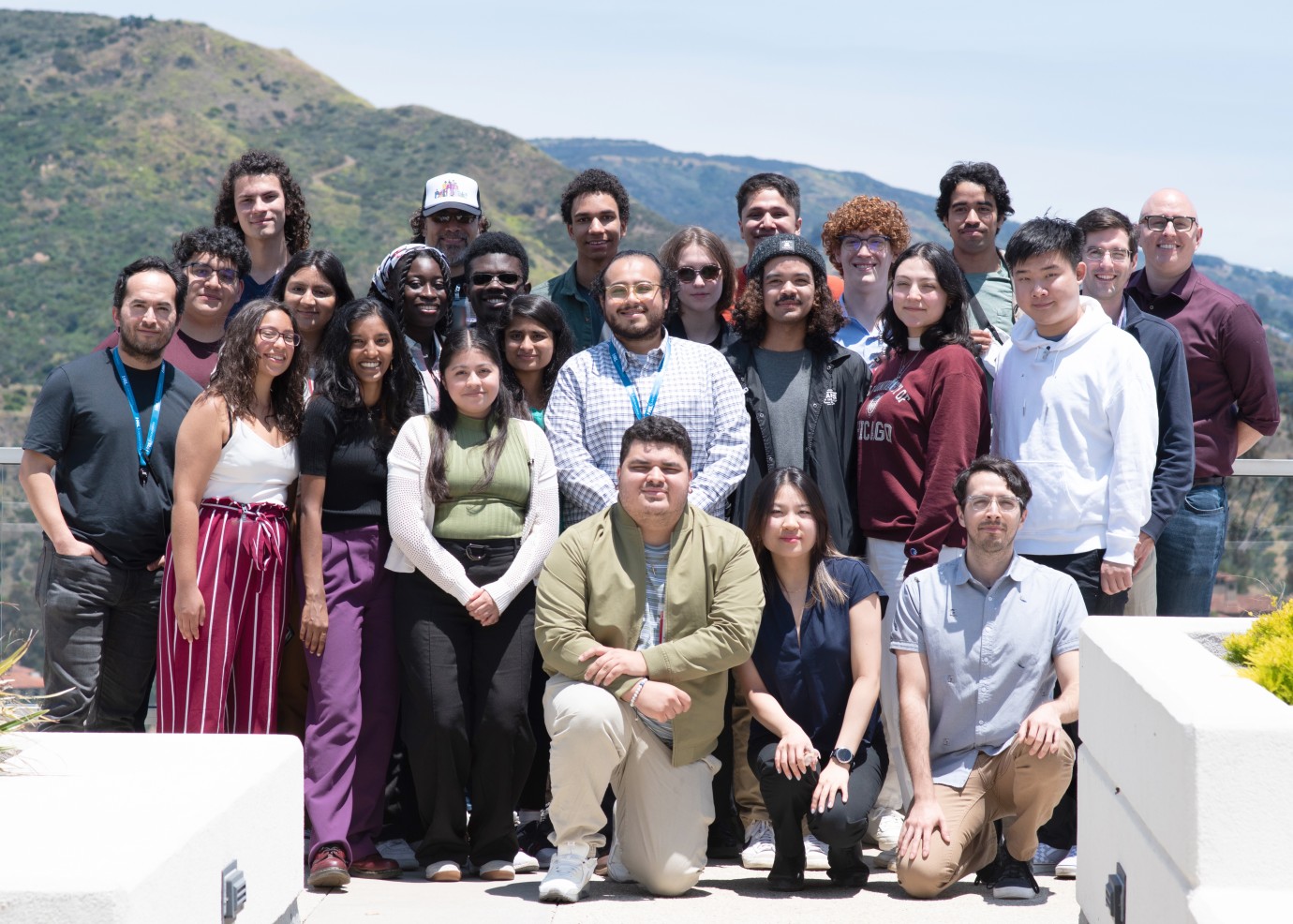
Q&A with the 2023 Open Quantum Initiative fellows
Eight Open Quantum Initiative undergraduate fellows recently completed quantum research experiences that contributed to Q-NEXT R&D. In this Q&A, they share what they did this summer. Read More
-
Quantum capital of the world: emerging field that could solve ‘unsolvable’ problems
From WGN News: Chicago is aiming to become the quantum capital of the world. Public and private investment, workforce efforts, tech startups, and collaboration across academia, government and industry are all helping position Illinois as a leader in the quantum revolution. The WGN news piece features Q-NEXT Director David Awschalom and Q-NEXT collaborator Pranav GQuantum capital of the world: Emerging field that could solve ‘unsolvable’ problems okhale of Infleqtion. Read More
-

Major milestone achieved in new quantum computing architecture
Argonne and partners attained a major milestone toward quantum computing based on single-electron qubits: nearly a thousand-fold increase in coherence time and a first demonstration of scale-up. Read More
-
David Awschalom wins global Breakthrough of the Year award
David Awschalom, Q-NEXT Chief Science Officer and the Liew Family Professor of Quantum Engineering and Physics at the University of Chicago, received the prestigious Falling Walls Science Breakthrough of the Year in Physical Sciences for a pioneering body of work that broke the wall between quantum technology, molecules, and proteins. Read More
-
Helium lifts new quantum computing concept
A team led by Jacob Covey, who is part of Q-NEXT and is an Associate Professor at the University of Chicago, laid out a new concept that could turn helium’s light weight into the next generation of quantum computers. The design relies on helium-3, an isotope with different quantum properties than the helium-4 used to cool MRI machines and fill party balloons. Once built, the computer could use high-powered lasers as “optical tweezers” to capture and control individual atoms of helium. Read More
-
Researchers make materials that support quantum technology
Researchers from the University of Illinois Urbana-Champaign who are part of Q-NEXT are engineering material systems that support quantum technology. Chris Anderson and his team are developing materials for quantum transduction — the conversion of quantum information from one form to another. Elizabeth Goldschmidt, Daniel Shoemaker, and colleagues are developing quantum memory technology that stores quantum information for extended periods of time. Read More
-
Silicon Chip Offers New Way to Probe Quantum Materials in Strong Magnetic Fields
Scientists have created a silicon chip that can detect the electrical behavior of very small materials by using very high-frequency waves. The chip is made only from silicon and other non-superconducting materials and still performs very well when cooled from room temperature down to about 4 Kelvin. Read More
-
Making quantum bits ready to use again much sooner
Scientists from the University of Wisconsin-Madison and Intel have found that a simple electrical pulse can quickly push a quantum dot qubit out of a latched state and return it to its starting condition with very high reliability. Read More
-
Q-NEXT-developed open-source software receives 2026 R&D 100 award
SeQUeNCe, a free, open-source software developed by Argonne scientists with Q-NEXT support, is one of seven Argonne projects that received a 2026 R&D 100 Award. The SeQUeNCe software lets researchers test how quantum networks might work before building them. Read More
-
Researchers generate spontaneous magnons that synchronize with external signals
Researchers at Argonne and the University of Illinois Urbana-Champaign demonstrate a method for generating stable ripples in magnetic materials called magnons. The work opens avenues for information processing in microelectronics and quantum devices. Read More
-
Uncovering the hidden disorder in silicon quantum computers
From the U.S. Department of Energy: Q-NEXT researchers map the variation in materials to the atom level to scale up silicon qubits Read More
-
Color centers in high-purity diamond
Researchers mapped how electron irradiation makes defects inside diamond, finding that creating more vacancies does not always produce more NV centers. Too many vacancies can form unwanted defects. This result can inform advances in quantum sensing. Read More
-
Containing multitudes: SLAC scientist collaborates to create scalable qubits
At SLAC National Accelerator Laboratory, Q-NEXT collaborator Shannon Harvey develops quantum dots — a mass-producible type of qubit. Driven by curiosity about nature and how things work, Harvey draws on her facility for working at the nanoscale. Read More