
quantum computing
-
Turning a million-qubit quantum computing dream into reality
From The Next Platform: Earlier this year, Intel announced that it had successfully fabricated more than 10,000 arrays, each with three to 55 quantum dots, on a 300-millimeter wafer with a yield higher than 95%. Q-NEXT collaborator James Clarke, director of quantum hardware at Intel, says the feat was made possible thanks to the fact that Intel, unlike most other companies pursuing quantum, runs its own fabs, which the company also used to manufacture the control logic needed that allows such a high density of qubits. Read More
-
Frozen neon invention jolts quantum computer race
From IEEE Spectrum: New findings from Argonne National Laboratory and the University of Chicago suggest that electrons trapped on frozen solid neon could prove a simple yet powerful kind of qubit for use in future quantum computers. Read More
-
A mathematical shortcut for determining quantum information lifetimes
From Tohoku University: Having crunched the numbers on the quantum properties of 12,000 elements and compounds, researchers supported by Q-NEXT have published a new equation for approximating the length of time materials can maintain quantum information, called 'coherence time.' Read More
-
UW–Madison, industry partners run quantum algorithm on neutral atom quantum computer for the first time
From the University of Wisconsin–Madison: Researchers have successfully run a quantum algorithm on a type of quantum computer known as a cold atom quantum computer for the first time. The achievement by the team of scientists from the University of Wisconsin–Madison, ColdQuanta and Riverlane brings quantum computing one step closer to being used in real-world applications. Read More
-
Intel to install quantum computing test bed for Q-NEXT
Partnership with the world’s leading chip manufacturer accelerates the development of quantum devices. Read More
-
Increasing the accuracy of quantum algorithms
From Pacific Northwest National Laboratory: Q-NEXT collaborator Bo Peng and team use the Peeters-Devreese-Soldatov formulation to improve the accuracy of calculations for quantum chemistry. Read More
-
The race to build a fault-tolerant superconducting quantum computer
From IEEE Spectrum: Amazon, Google, and IBM are all pursuing different strategies to reduce error rates. Q-NEXT collaborator Oskar Painter of Caltech and team find they can 'make cat qubits that are highly resistant to bit flip, where a qubit flips from one state to another, one of two main sources of error a superconducting qubit can have.' Read More
-
Computer scientists eliminate pesky quantum computations
From Quanta: For years, intermediate measurements made it hard to quantify the complexity of quantum algorithms. Quanta Magazine unpacks a 2020 result by Q-NEXT collaborator Bill Fefferman and team that establishes that those measurements aren’t necessary after all. Read More
-
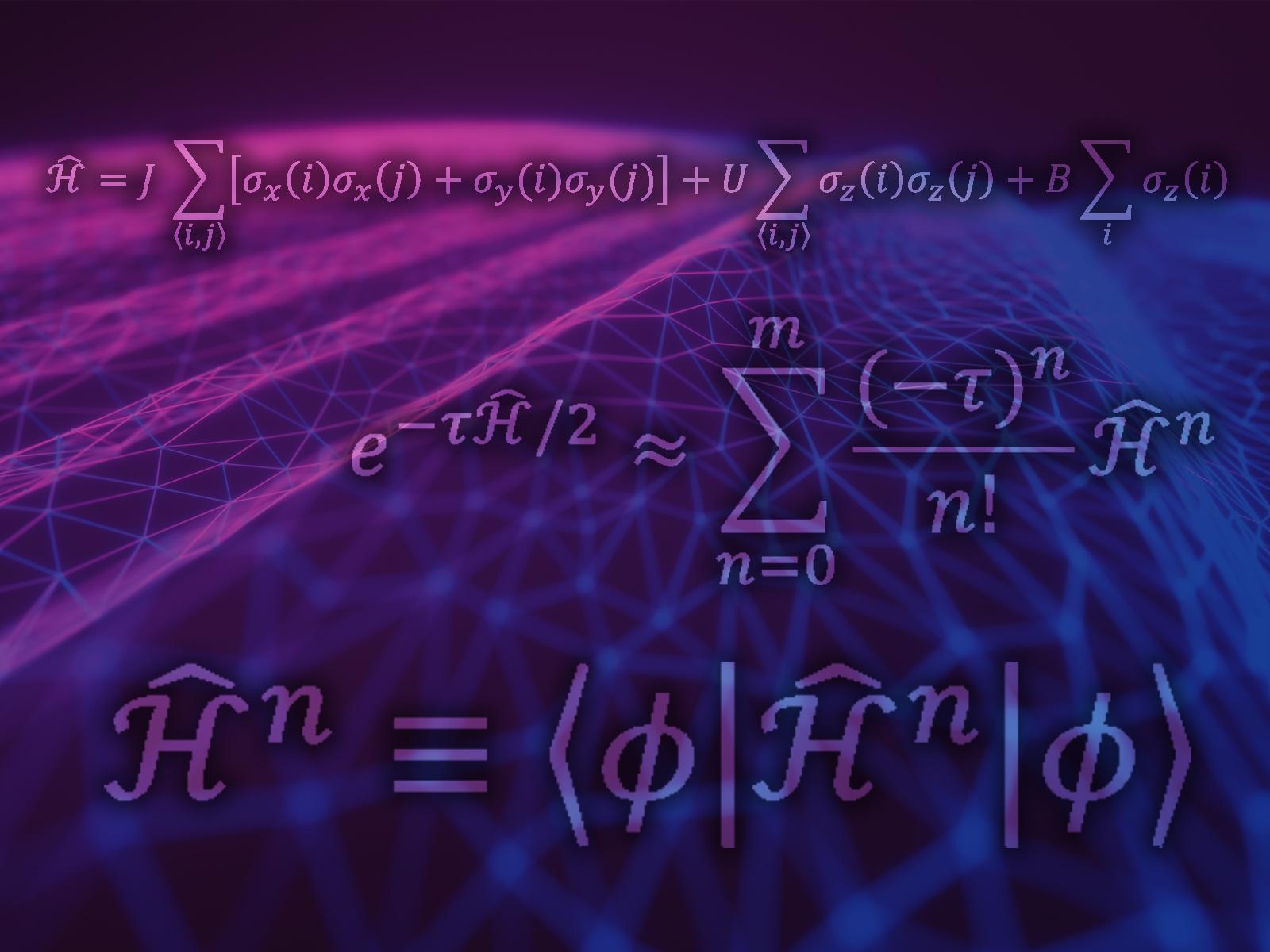
Reviewing a hybrid computing approach for quantum chemistry
Researchers led by Bo Peng of Q-NEXT and Pacific Northwest National Laboratory are using different tactics for modeling quantum systems, combining quantum and classical computing to obtain more accurate results in a hybrid approach. Read More
-
Quantum computing interconnect, memory and other engineering advances
From The Post-Quantum World: Technologies like interconnects and improved memory for repeaters will enable quantum computers to accelerate in power and connectivity in the future. The U.S. Department of Energy is focused on strengthening the nation’s leadership position in the quantum arms race, but the technologies will benefit all areas of the industry. Q-NEXT CTO Supratik Guha chats with Konstantinos Karagiannis on Protiviti's The Post-Quantum World podcast. Read More
In the News
See all In the News-
Uncovering the hidden disorder in silicon quantum computers
From the U.S. Department of Energy: Q-NEXT researchers map the variation in materials to the atom level to scale up silicon qubits Read More
-
Neutral atom computers: the physics of Rydberg quantum gates | Mark Saffman
From 632nm: Mark Saffman, professor at the University of Wisconsin–Madison and chief scientist at Infleqtion, discusses the physics of optical tweezers and Rydberg gates, how neutral atoms perform quantum logic and create entanglement, and why this platform offers advantages in connectivity and scalability. Read More
-
Prof. Giulia Galli appointed CNRS Fellow-Ambassador
From the University of Chicago: With the appointment, Galli joins a prestigious cohort of leading figures from the world’s scientific community. Read More
-
Tuning into quantum sounds
From Caltech: Researchers at Caltech and Stanford University, including Stanford's Amir Safavi-Naeini, create tiny vibrating devices that can naturally display quantum behavior without needing an external quantum circuit. By harnessing microscopic defects already present in the material, the team achieved single-phonon nonlinear effects that could enable simpler quantum sensors capable of detecting and studying individual molecules with extraordinary sensitivity. Read More
-
Illinois touts growing quantum workforce as state shows industry leadership
From NPR Illinois: Q-NEXT Workforce Development Lead Emily Easton discusses the growing quantum education and workforce ecosystem in Illinois. Read More