 Simulating large one-dimensional neutral-atom quantum systems
Physical Review A (2025)
As quantum systems scale up to include more qubits, understanding how much noise an algorithm or device can handle is crucial. Classical simulations can help study this, but they become costly as the system size grows.
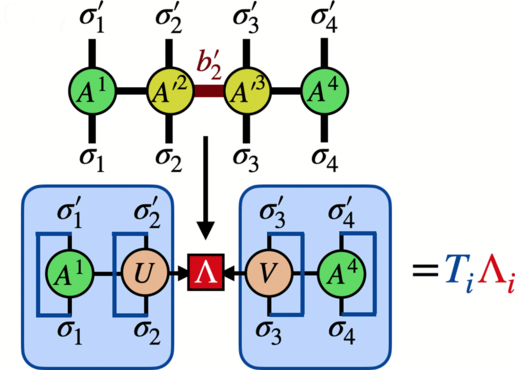
To address this, researchers used a simulation method called tensor networks, which makes it possible to study much larger systems efficiently. They applied this to a quantum algorithm running on neutral-atom qubits while introducing a new technique to keep the simulations both accurate and manageable.
Their results show that larger circuits are more likely to fail when noise causes qubits to be lost. But if the system does succeed, the quality of the results holds up well against some types of noise. However, errors involving interactions between multiple atoms are harder to overcome.
The paper is authored by James Allen, Matt Otten, Stephen Gray and Bryan Clark, who conducted their work at the University of Illinois Urbana-Champaign, HRL Laboratories and Argonne National Laboratory.