University of Illinois Urbana-Champaign
-
DARPA’s Quantum Proving Ground — with University of Illinois Urbana-Champaign
From Protiviti's The Post-Quantum World podcast: Imagine 128 acres of land devoted to advancing quantum information science in a major city. The Illinois Quantum and Microelectronics Park is expected to draw leading companies and researchers to Chicago, and DARPA is already playing a significant role. Host Konstantinos Karagiannis chats with UIUC's Brian DeMarco, a Q-NEXT collaborator, and Harley Johnson. Read More
-
A new future in quantum computing
From the University of Illinois Urbana-Champaign: The Grainger College of Engineering announces that it will have leadership roles in two massive new quantum computing initiatives: the Illinois Quantum and Microelectronics Park, seeded by $500 million in state funding, and the DARPA Quantum Proving Ground, supported by federal funding and the state’s co-investment of up to $140 million. Read More
-
Samir Mayekar and Nadya Mason: The quantum revolution is coming to Illinois
From The Chicago Tribune: Following last week's announcement from the state of Illinois on the creation of the Illinois Quantum & Microelectronics Park in South Chicago, Q-NEXT collaborator Nadya Mason and Samir Mayekar, both of the University of Chicago, detail how Illinois is spurring the quantum revolution in this op-ed. Subscription required. Read More
-
Quantum at the Capitals
From the University of Illinois Urbana-Champaign: Over the course of a month, IQUIST Director and Q-NEXT collaborator Brian DeMarco has traveled to the U.S. and Illinois capitals to show national and state leaders what quantum is capable of. He spoke with decision makers at the the NSF Quantum Showcase on Capitol Hill and the Illinois Manufacturing Association’s 2024 Business Day in Springfield. Read More
-
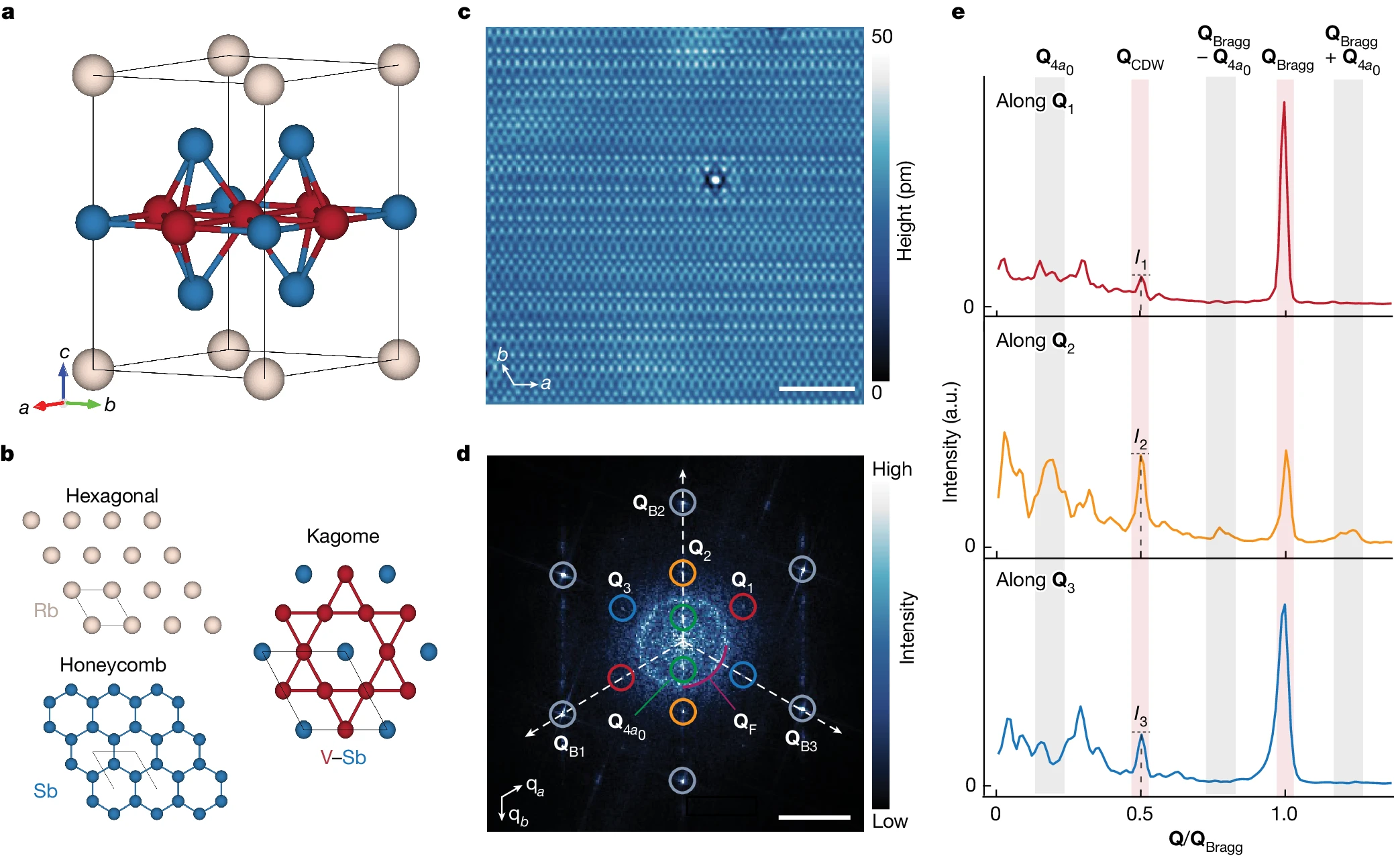
Manipulating superconductor materials for quantum optical materials
Scientists find strong evidence for broken-time reversal symmetry in a class of superconductors, opening possibilities for controlling quantum materials using light. Read More
-
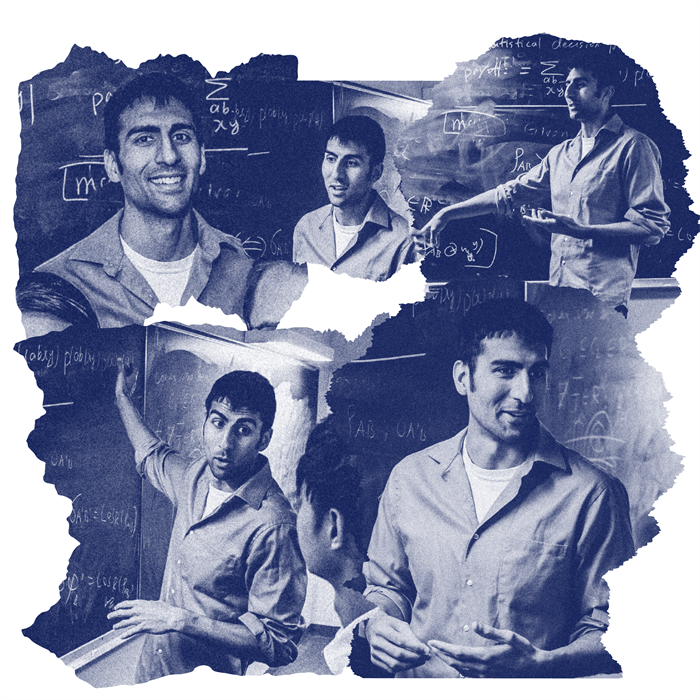
'Get entangled' with Eric Chitambar
At the University of Illinois Urbana-Champaign, theorist Eric Chitambar studies quantum communication. He is passionate about teaching and appreciates the strong collaborative spirit at UIUC, where his experimentalist colleagues help realize his group's ideas on hardware. Read More
-
Grainger engineers bring quantum expertise to DOE InterQnet initiative
From University of Illinois Urbana-Champaign: Q-NEXT collaborators Eric Chitambar and Jacob Covey of UIUC are bringing their expertise to InterQnet, a three-year initiative to demonstrate that quantum computers separated by large distances and even based on different hardware architectures can work in tandem. InterQnet, led by Argonne National Laboratory, will give a proof of principle for the distributed quantum computing paradigm by connecting three nodes over a quantum network. Read More
-
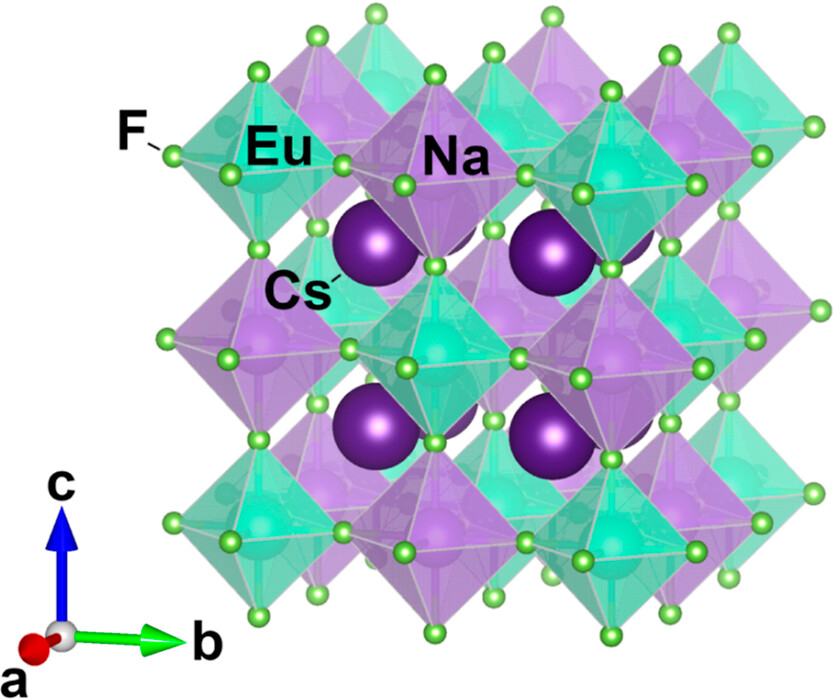
Design rules and synthesis of quantum memory candidates
From the University of Illinois Urbana-Champaign: Researchers use density functional theory calculations to identify possible europium compounds to serve as a new quantum memory platform. They also synthesize one of the predicted compounds, a brand new, air-stable material that is a strong candidate for use in quantum memory Read More
-
Bringing quantum entanglement to the people
From the National Science Foundation: NSF’S Quantum Leap Challenge Institute Hybrid Quantum Architectures and Networks at the University of Illinois Urbana-Champaign, a Q-NEXT partner, has created a working demonstration that brings entanglement between photons to a public setting for the first time. Read More
-
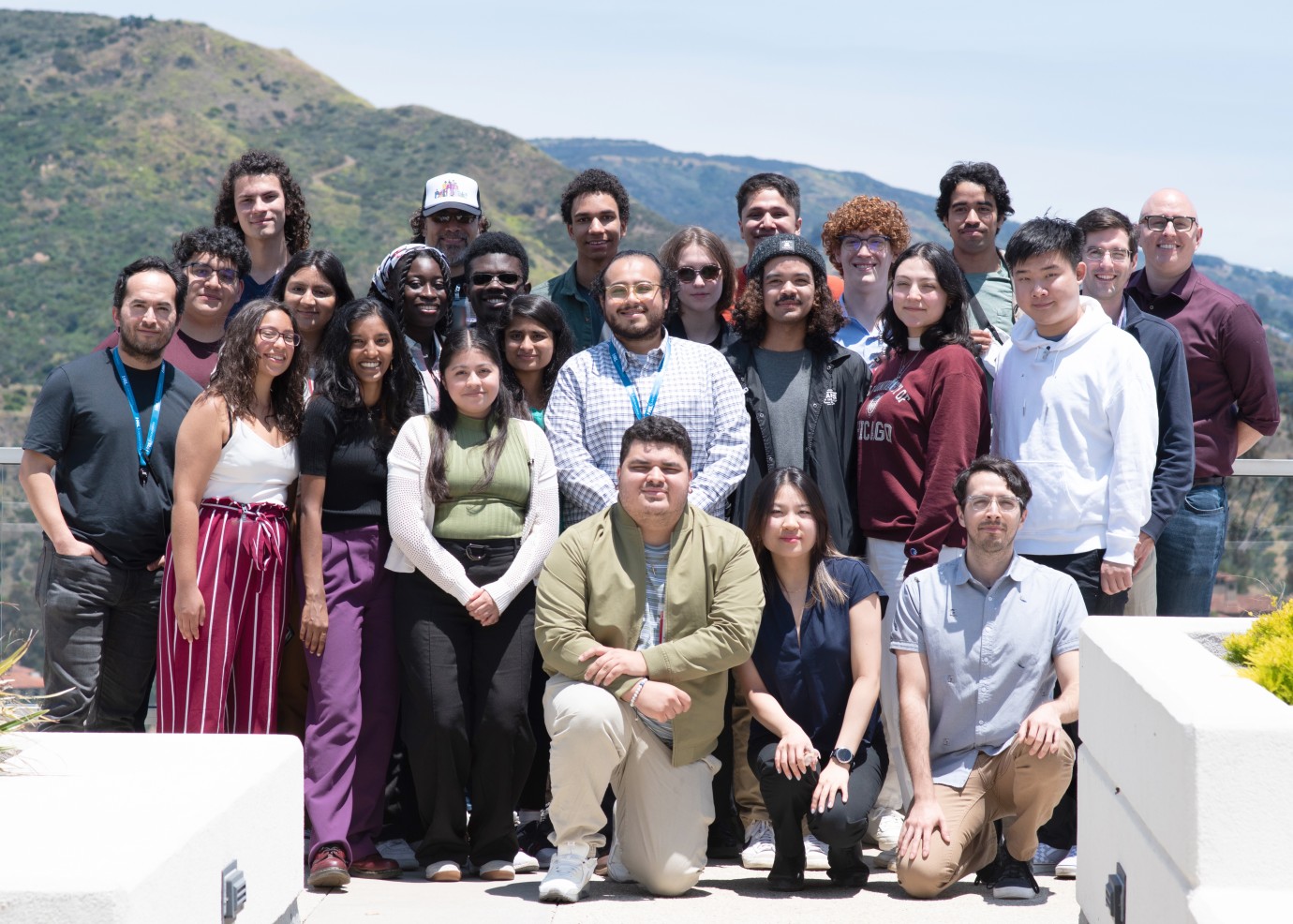
Q&A with the 2023 Open Quantum Initiative fellows
Eight Open Quantum Initiative undergraduate fellows recently completed quantum research experiences that contributed to Q-NEXT R&D. In this Q&A, they share what they did this summer. Read More
-
David Awschalom wins global Breakthrough of the Year award
David Awschalom, Q-NEXT Chief Science Officer and the Liew Family Professor of Quantum Engineering and Physics at the University of Chicago, received the prestigious Falling Walls Science Breakthrough of the Year in Physical Sciences for a pioneering body of work that broke the wall between quantum technology, molecules, and proteins. Read More
-
Helium lifts new quantum computing concept
A team led by Jacob Covey, who is part of Q-NEXT and is an Associate Professor at the University of Chicago, laid out a new concept that could turn helium’s light weight into the next generation of quantum computers. The design relies on helium-3, an isotope with different quantum properties than the helium-4 used to cool MRI machines and fill party balloons. Once built, the computer could use high-powered lasers as “optical tweezers” to capture and control individual atoms of helium. Read More
-
Researchers make materials that support quantum technology
Researchers from the University of Illinois Urbana-Champaign who are part of Q-NEXT are engineering material systems that support quantum technology. Chris Anderson and his team are developing materials for quantum transduction — the conversion of quantum information from one form to another. Elizabeth Goldschmidt, Daniel Shoemaker, and colleagues are developing quantum memory technology that stores quantum information for extended periods of time. Read More
-
Silicon Chip Offers New Way to Probe Quantum Materials in Strong Magnetic Fields
Scientists have created a silicon chip that can detect the electrical behavior of very small materials by using very high-frequency waves. The chip is made only from silicon and other non-superconducting materials and still performs very well when cooled from room temperature down to about 4 Kelvin. Read More
-
Making quantum bits ready to use again much sooner
Scientists from the University of Wisconsin-Madison and Intel have found that a simple electrical pulse can quickly push a quantum dot qubit out of a latched state and return it to its starting condition with very high reliability. Read More
-
Q-NEXT-developed open-source software receives 2026 R&D 100 award
SeQUeNCe, a free, open-source software developed by Argonne scientists with Q-NEXT support, is one of seven Argonne projects that received a 2026 R&D 100 Award. The SeQUeNCe software lets researchers test how quantum networks might work before building them. Read More
-
Researchers generate spontaneous magnons that synchronize with external signals
Researchers at Argonne and the University of Illinois Urbana-Champaign demonstrate a method for generating stable ripples in magnetic materials called magnons. The work opens avenues for information processing in microelectronics and quantum devices. Read More
-
Uncovering the hidden disorder in silicon quantum computers
From the U.S. Department of Energy: Q-NEXT researchers map the variation in materials to the atom level to scale up silicon qubits Read More
-
Color centers in high-purity diamond
Researchers mapped how electron irradiation makes defects inside diamond, finding that creating more vacancies does not always produce more NV centers. Too many vacancies can form unwanted defects. This result can inform advances in quantum sensing. Read More
-
Containing multitudes: SLAC scientist collaborates to create scalable qubits
At SLAC National Accelerator Laboratory, Q-NEXT collaborator Shannon Harvey develops quantum dots — a mass-producible type of qubit. Driven by curiosity about nature and how things work, Harvey draws on her facility for working at the nanoscale. Read More