Q-NEXT partner Keysight Technologies is known around the world as an electronics test and measurement company: If you need help with network analysis or high-speed digital design, Keysight has you covered.
And yet, Keysight is about more than that, says Elizabeth Ruetsch, general manager of Keysight’s Quantum Engineering Solutions team. Having helped spur technological innovation under one name or another for 80 years — it was renamed Keysight Technologies in 2014 — the California-based company entered the quantum information science arena a little over four years ago. Since then, it has been supercharging its quantum capabilities.
Over five years, Keysight has acquired three quantum-specific companies: Signadyne, Labber Quantum, Quantum Benchmark. It boasts customer engagements in quantum computing, communication, sensing and materials research. And the Keysight team that works on quantum is more than 100 employees strong, thanks in part to a hiring effort that attracted a bevy of quantum physicists from a wide cross section of businesses, institutions and universities.
Drawing on these strengths in quantum science and its decades of industry leadership in simulation, design, and test, Keysight will be vital partner in Q-NEXT’s effort to produce high-quality, standardized quantum materials at the center’s two foundries: the Argonne Quantum Foundry and the SLAC Detector Microfabrication Facility.
“We are excited to partner with Q-NEXT to tailor quantum device design toolkits for enhanced quantum sensing and improved modeling of quantum materials,” Ruetsch said.
Core to the mission of Q-NEXT is the creation of a robust supply chain supporting quantum materials and devices in the national interest. Keysight Technologies is well aligned with this mission: It is a U.S.-headquartered leader and founding member of the U.S. Quantum Economic Development Consortium, and it empowers the full gamut of materials development, from simulation to design through experiment.
“Not only does Keysight bring the full complement of quantum-systems design, simulation and testing to Q-NEXT, they also have a world-class team of quantum scientists helping us realize and control next-generation devices. I’m delighted to have Keysight as a partner in our collaboration,” said Q-NEXT Director David Awschalom.
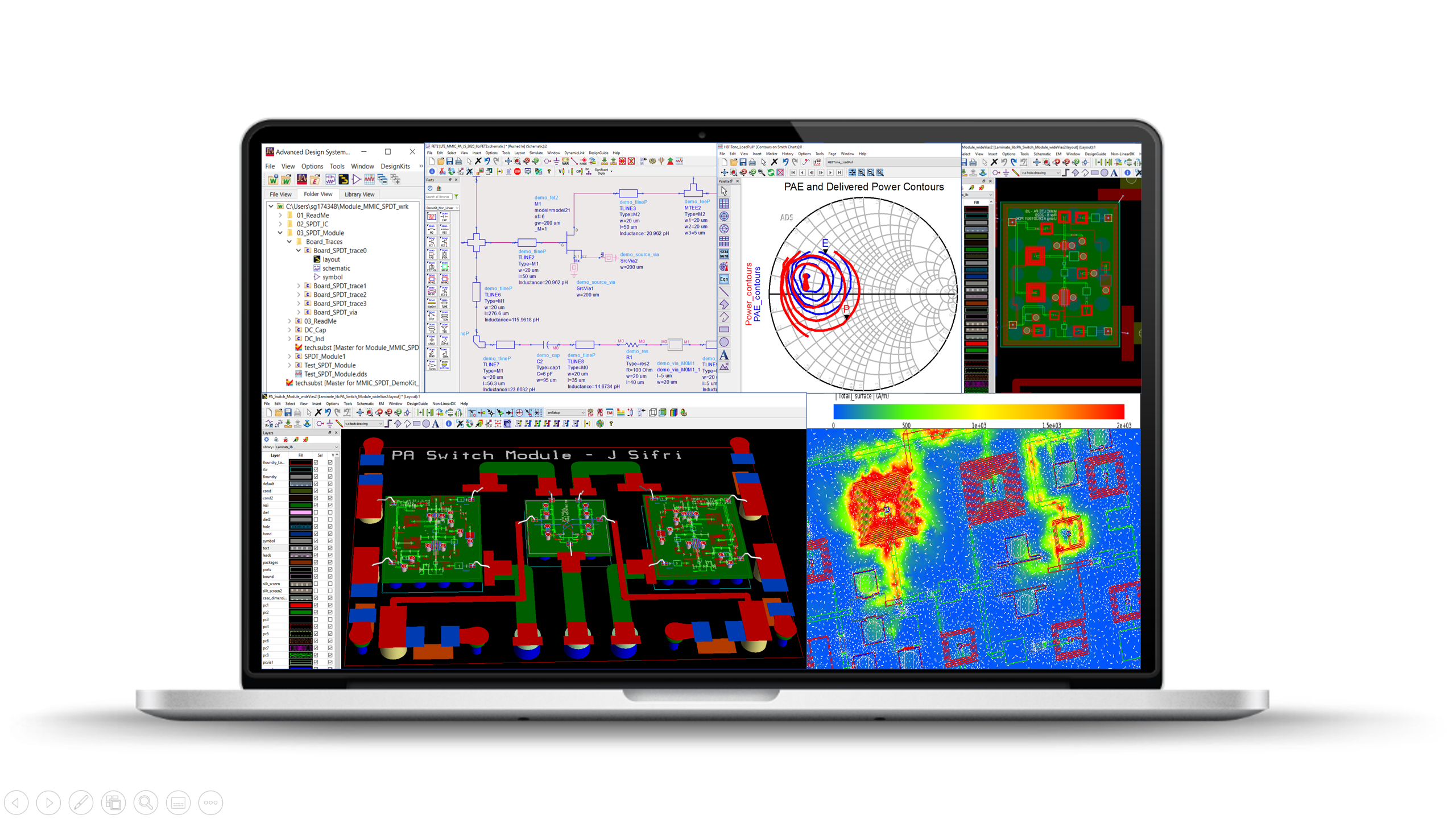
In an attempt to unify device design with fundamental materials research, as a part of Q-NEXT, Keysight will leverage classical device design toolkits such as PathWave Advanced Design System and PathWave Device Modeling.
“With Labber, we have a wonderful software stack to complement our control electronics, which now provides a complete quantum solution for the control and readout of spin qubits and diamond quantum sensors,” Ruetsch said.
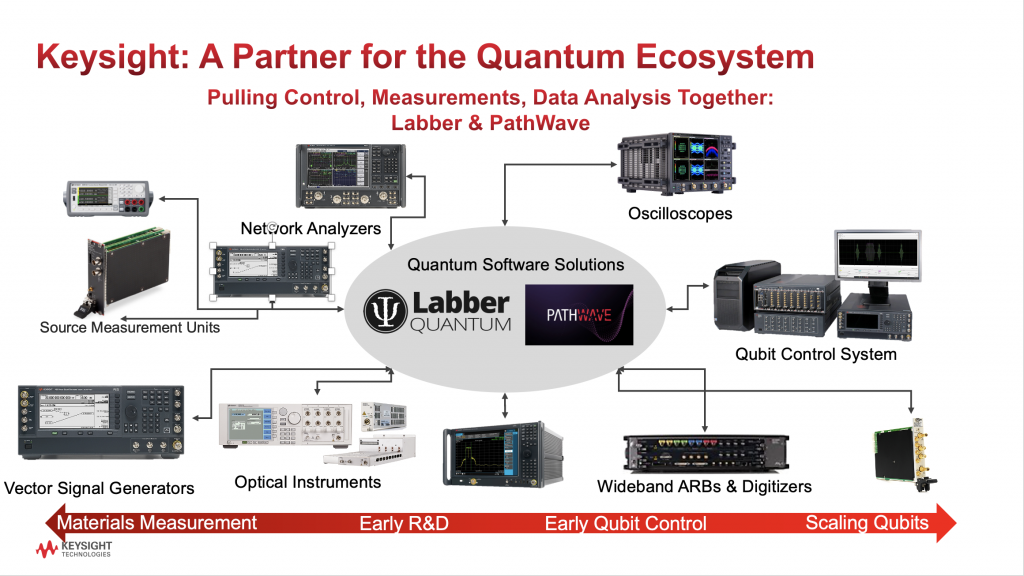
Keysight’s quantum physicists include many scientists with combined decades of industry experience. Pairing in-house quantum expertise with outside partners enables Keysight to more holistically align with them. Together, they address well-known challenges in quantum engineering such as setting up multipurpose quantum testbeds in materials discovery, quantum sensing and quantum information processing. As a member of the Q-NEXT collaboration, Keysight is working to forge new ways of solving challenges in qubit design or system level calibration.
In quantum, Keysight collaborates with a diverse portfolio of partners, including those in communications, aerospace and defense, wireless communications, automotive research and university research.
“Quantum cuts across many of the industry segments we serve today,” Ruetsch said. “That’s one of the unique ways Keysight can contribute: We are already engaging with these customers in other areas.”
An important part of the Q-NEXT mission is to grow the quantum workforce, and Keysight has long been committed to workforce development. It provides the online software platform for the mentorship program Women in Quantum, which as of July has garnered the participation of 400 participants from around the world.
“I’m very excited about that, because making the connection between women at universities and professionals in industry creates a critical bridge in the talent pipeline,” Ruetsch said.
The company also hosts Keysight University, a collection of free online self-paced trainings on all things engineering. The program will soon see the addition of courses on quantum topics taught by quantum experts.
“These courses are not uniquely focused on the Keysight offering,” Ruetsch said. “It’s more of a holistic solution that people can use to further their understanding of quantum.”
Ruetsch invites Q-NEXT collaborators to contact Keysight to see how they can help with their challenges.
“We do more than apply existing equipment to quantum problems,” Ruetsch said. “We speak quantum.”
This work was supported by the DOE Office of Science National Quantum Information Science Research Centers.