Multireference embedding and fragmentation methods for classical and quantum computers: from model systems to realistic applications
Chemical Reviews (2026)
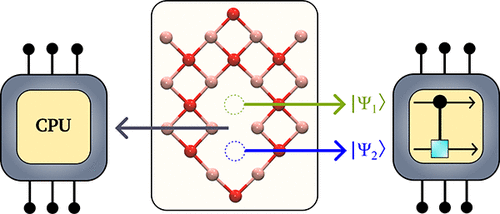
One of the hardest problems in quantum chemistry is accurately describing how electrons strongly interact with each other, especially in large molecules or solid materials. The most accurate methods can handle these interactions, but they become too computationally expensive as systems get bigger.
In this paper, the authors explain how quantum embedding methods help solve this problem by breaking large systems into smaller, more manageable fragments. It summarizes recent progress in two such approaches and discusses how they work both on classical computers and, in the future, on quantum computers. Overall, these techniques could make highly accurate chemistry calculations possible for much larger and more complex systems than before.
The paper authors are Shreya Verma, Abishek Mitra, Qiaohong Wang, Ruhee D’Cunha, Bhavnesh Jangid, Matthew Hennefarth, Valay Agarawal, Leon Otis, Soumi Haldar, Matthew Hermes and Laura Gagliardi, who conducted their work at the University of Chicago.
Image reprinted with permission from Chem. Rev. 2026, 126, 1, 184–203. Copyright 2026 American Chemical Society.