
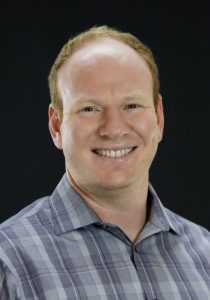
Shimon Kolkowitz of Q-NEXT quantum center awarded Sloan Fellowship

Shimon Kolkowitz

Q-NEXT collaborator Shimon Kolkowitz has received a 2022 Sloan Fellowship, a competitive prestigious award given to promising researchers in the early stages of their careers.

Kolkowitz, an assistant professor of physics at the University of Wisconsin–Madison, builds some of the most precise clocks in the world by trapping ultracold atoms of strontium — clocks so accurate they could be used to test fundamental theories of physics and search for dark matter. As a member of Q-NEXT, a quantum research center led by the U.S. Department of Energy’s Argonne National Laboratory, he uses quantum science to develop sensors that detect phenomena at the nanometer level — 50,000 times smaller than the width of a human hair — and measurement tools with unique capabilities.

“Today’s Sloan Research Fellows represent the scientific leaders of tomorrow,” said Adam F. Falk, president of the Alfred P. Sloan Foundation, which has awarded the fellowships since 1955. “As formidable young scholars, they are already shaping the research agenda within their respective fields—and their trailblazing won’t end here.”

Kolkowitz is one of 118 researchers from the United States and Canada honored by the New York-based philanthropic foundation.

Each fellow receives $75,000 in research funding from the foundation, which awards Sloan Research Fellowships in eight scientific and technical fields: chemistry, computer science, economics, mathematics, computational and evolutionary molecular biology, neuroscience, ocean sciences and physics.

Q-NEXT research is supported by the U.S. Department of Energy Office of Science National Quantum Information Science Research Centers.


News and features

See all news and features
  • David Awschalom wins global Breakthrough of the Year award

    David Awschalom, Q-NEXT Chief Science Officer and the Liew Family Professor of Quantum Engineering and Physics at the University of Chicago, received the prestigious Falling Walls Science Breakthrough of the Year in Physical Sciences for a pioneering body of work that broke the wall between quantum technology, molecules, and proteins. Read More

  • Helium lifts new quantum computing concept

    A team led by Jacob Covey, who is part of Q-NEXT and is an Associate Professor at the University of Chicago, laid out a new concept that could turn helium’s light weight into the next generation of quantum computers. The design relies on helium-3, an isotope with different quantum properties than the helium-4 used to cool MRI machines and fill party balloons. Once built, the computer could use high-powered lasers as “optical tweezers” to capture and control individual atoms of helium. Read More

  • Researchers make materials that support quantum technology

    Researchers from the University of Illinois Urbana-Champaign who are part of Q-NEXT are engineering material systems that support quantum technology. Chris Anderson and his team are developing materials for quantum transduction — the conversion of quantum information from one form to another. Elizabeth Goldschmidt, Daniel Shoemaker, and colleagues are developing quantum memory technology that stores quantum information for extended periods of time. Read More

  • Q-NEXT-developed open-source software receives 2026 R&D 100 award

    SeQUeNCe, a free, open-source software developed by Argonne scientists with Q-NEXT support, is one of seven Argonne projects that received a 2026 R&D 100 Award. The SeQUeNCe software lets researchers test how quantum networks might work before building them. Read More

  • Researchers generate spontaneous magnons that synchronize with external signals

    Researchers at Argonne and the University of Illinois Urbana-Champaign demonstrate a method for generating stable ripples in magnetic materials called magnons. The work opens avenues for information processing in microelectronics and quantum devices. Read More